
Tell Me What You Did
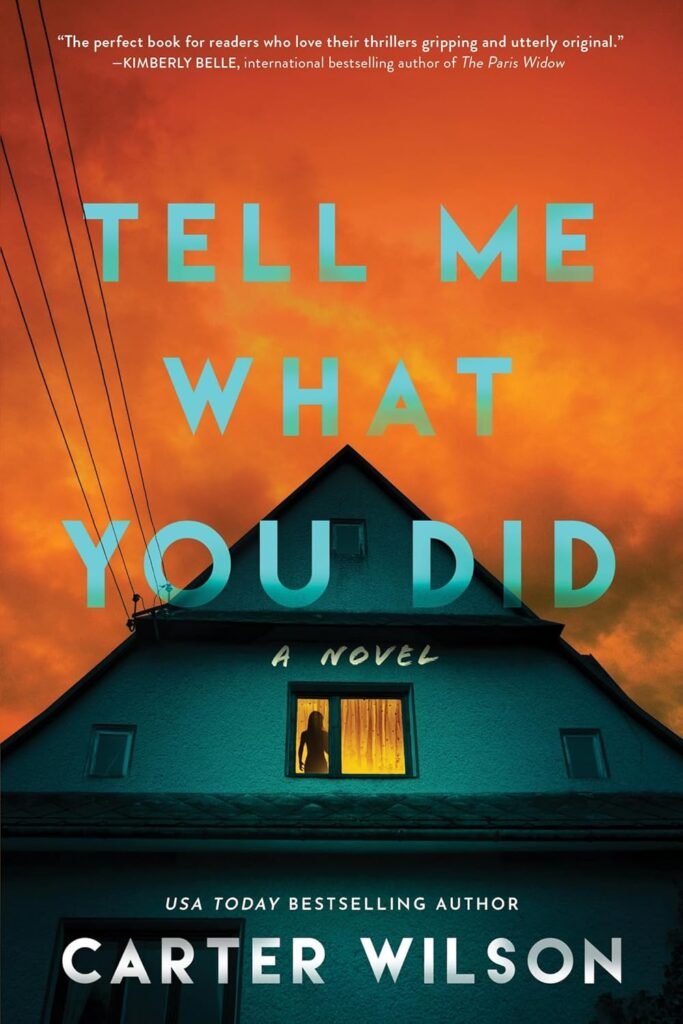
Poe Webb built her podcast, Tell Me What You Did, on the premise that people want to confess. Every week, anonymous callers admit to crimes—some petty, some monstrous—and Poe listens. She asks sharp, calm questions, curates the chaos, and chalks up with another hit episode. She’s not calling in, however. Even though, seven years ago, she tracked down the man she believed murdered her mother and shot him. This, no one knows and Poe, well, she sleeps just fine.
Her unraveling begins with a call. A man named Ian Hindley claims, in eerie detail, that he was the one who killed Poe’s mother seventeen years ago. He cannot be telling the truth—except maybe he is. Poe, suddenly, terribly, isn’t sure. Worse still, he wants to go live on Halloween. He says he knows what Poe did, and he wants to tell that story too.
Suddenly, Poe’s life has gone to hell. She’s consumed by the possibility that she got it wrong—that the man she killed wasn’t the monster she believed him to be. The novel’s tension lies not in whether she’ll be caught, but whether she can live with what might be true. Her relationships—with her father and with Kip, her producer and partner—complicate that question. They are written with restraint, and they matter not because they humanize her, but because they raise the stakes of what she stands to lose. (And losing Kip would be a bummer–he’s a finely rendered love interest and the romance that grounds the story is welcome.)
But, even as lovely as Kip and Poe are, the real relationship here is between Poe and her tormentor. Ian Hindley is genuinely chilling.. He’s composed, persuasive, and plausible. He doesn’t shout or posture. He sounds, with terrifying calm, like a man who knows he’s telling the truth. He’s hard to to disprove and impossible to ignore.
Tell Me What You Did is a wild read. Each chapter is short and that staccato rhythm reflects the fragmented way uncertainty creeps in and, slowly, undermines the things we’re sure of. This is a dual timeline story—it weaves between Poe’s teenage grief and her adult reckoning—and both parts work. Even the now overdone podcast schtick suits the tale–the transcripts, emails, and production notes add narrative depth rather than gimmick, capturing the gap between Poe’s public persona and private fear.
This is a novel I couldn’t put down. It’s not perfect–the last twist strains credulity, and the pacing tips toward spectacle–but Wilson earns enough trust along the way that I stayed with it and was glad to have done so. Tell Me What You Did is a gripping, thoughtful, rollicking thrill laden ride of a story and I recommend it highly.