Broken Souls and Bones
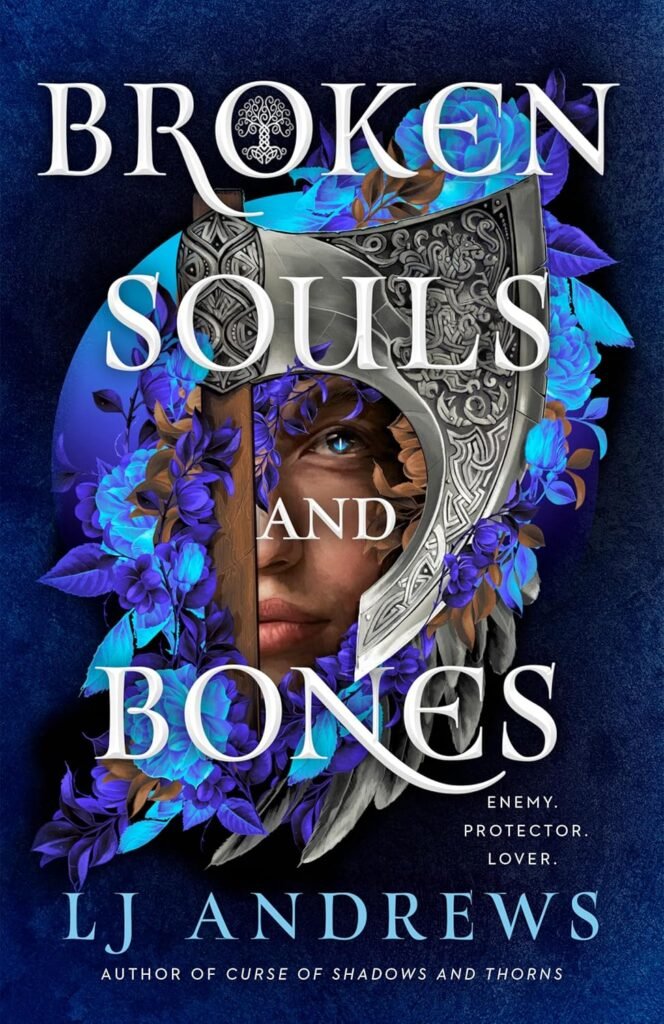
Broken Souls and Bones, the first book in L.J. Andrews’ Stonegate series, promises magic, mystery, and a slow-burn enemies-to-lovers romance set in a Viking-inspired fantasy world. Unfortunately, the execution is uneven, leaving much of the story feeling as if it too needs a good melding—its pacing, characters, and world-building don’t quite come together into something whole.
The premise, though, is admirably ambitious. Lyra Bein, a quiet young woman who has spent her life hiding her forbidden melder abilities, is forced into the King’s service after using her power to save her best friend. Melder magic—essentially fusing bones—is a fascinating concept, but for much of the book, Andrews doesn’t comprehensively explain how it works. Instead, the true power and cost of melding are dumped into the last chapters like a bucket of cold water. Now, this wouldn’t matter if the reveal hadn’t been necessary earlier in the novel, but it is. Without it and without more clarity about how the magic in this world works, the reader is left–and not in a good way–not really understanding what is happening to Lyra and those in her world.
This rush at the end is a problem through the tale. The first 85% of the book meanders through half-fleshed-out court intrigue and predictable character beats. Then, in the final chapters, the story careens into a rush of twists and revelations. I found myself flipping back, trying to piece together motivations and relationships that were barely hinted at earlier. This uneven structure makes the narrative frustratingly incomplete.
The romance between Lyra and Roark Ashwood—dubbed “Death Bringer” because he is a hard man who, shocker, will be softened by love—is meant to be a slow burn, but it fizzles as much as it flames. Roark, a nonverbal character–his communication skills are the best thing about him and I loved this part of the story. Roark is, like so many warrior heroes, brooding and mysterious in a way that should work, but his emotional depth comes and goes. Lyra, who is effortlessly able to understand his complex sign language, falls for him though he’s her enemy but, somehow, their mortal enemies to passionate lovers transition is glossed over, robbing their relationship of the vulnerability and trust. This is also a story where the risks of their partnership–sky-high for both of them–don’t seem to realistically slow their race to hot sex down. Their chemistry rarely burns the way an great enemies-to-lovers pairing should.
Lyra herself is… fine. She’s compassionate and resolute and occasionally TSTL. Her journey from reluctant servant to self-assured wielder of magic is more told than shown which makes her growth seem forced. There’s a darker side to her power hinted at in the final chapters, but it’s too little, too late to make much sense of and thus doesn’t deepen her character.
And then there’s the world-building. For most of the book, I was unclear on much of what was happening was to mean. The King is obsessed with magic but what is the end goal? Lyra can travel between worlds but what are those worlds and, crucially, how the hell do they work?The rival clan constantly attacking the kingdom is, I think a plot point that will be explored in the next book but its placement here just adds confusion. The court is meant to be full of lies and betrayal, but most of it feels like wallpaper albeit wallpaper with a very dark theme. I kept waiting for depth and detail to emerge–and it does, more or less, at the 90% mark of the story–but, for me, this happens too late in the novel to pack the wallop the finale’s reveal seems to be aiming for.
The book’s one strength lies in its ambition. There’s a clear attempt here to tackle big ideas—love, loyalty, the cost of power—but exploring such questions is hard to do well. There are romantasies that do this well–Compass and Blade, Starling House, and the A Gathering of Dragons series, for example. So while I applaud Andrews for striving, she hasn’t hit the mark here.
Broken Souls and Bones reads like an early draft of a story that hasn’t yet found its final form. There’s potential here—a fascinating magic system, a brooding love interest, and a heroine with untapped power—but it never quite coalesces into something memorable. That said, I’ll give the next book a whirl–here’s hoping it does a better job of fulfilling the promises of this series starter.