
The Briar Club
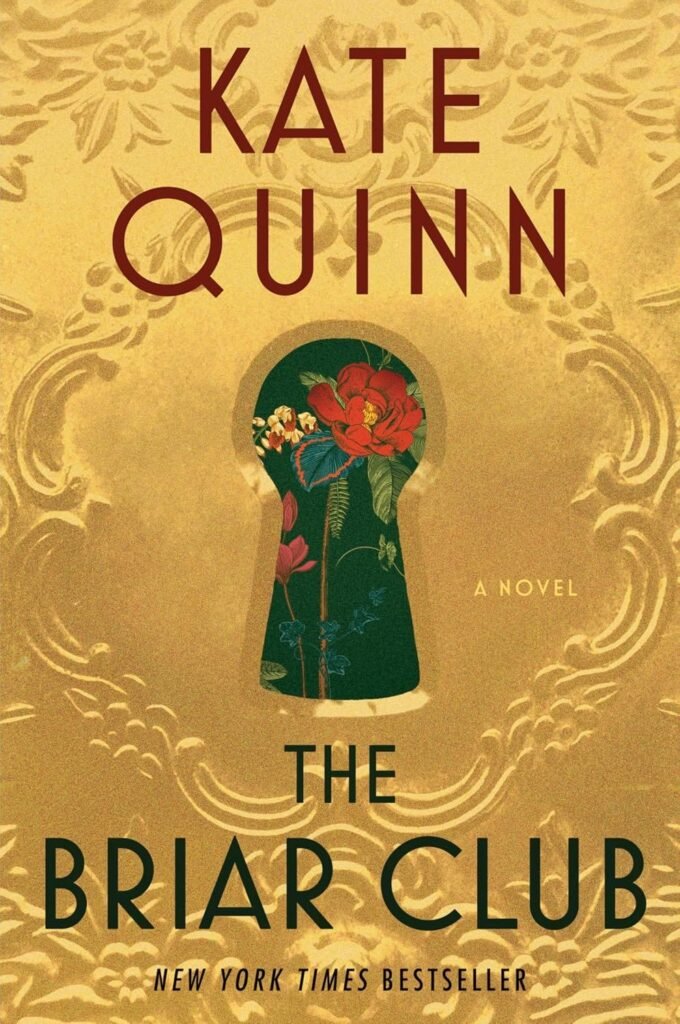
Kate Quinn’s The Briar Club is an affectionate, well-researched novel set in the first half of the 1950s, and I enjoyed it. This was my first Kate Quinn book and, sure, I’d try another. The writing is smooth and quick, the structure easy to follow, and the characters easy, almost too easy, to root for.
The book opens on Thanksgiving Day 1954 with a murder at Briarwood, a Washington, D.C., boardinghouse for—according to the landlady—ladies. Seven women board there, and the book belongs to all of them.
There’s Grace, a winsome, mysterious widow who starts a Thursday night supper club that brings the housemates together. Young mom Fliss is raising her very cranky toddler, Angela, while pining for her husband, an Army doctor serving overseas during the Korean War. Bea is a PE teacher and former professional baseball player who longs to get back into the game. Arlene works for HUAC and is the mean girl of the group. Claire is, among other things, a secretary for Senator Margaret Chase Smith. Reka is a snarly older immigrant with a perplexing interest in art. Nora, trying to leave behind her parochial Irish family, works at the National Archives. Along with Pete and Lina, the landlady’s children, an FBI agent, a club owner with ties to the famed Foggy Bottom gang, and the wife of an aspiring politician, they become something like family.
Their lives unfold over the first half of the 1950s. Each woman gets a very long chapter in which we learn her past, secrets, fears, and dreams. As the years go by, the women bond, truly bond, turning the boardinghouse into a home and making their own lives—and, in small ways, the larger world—better.
The setting is convincing. McCarthy and the Red Scare are central, and the Rosenberg trial is part of the backdrop. Racism, sexism, violence against women, queer rights, corrupt government, immigration, free speech: nearly every major issue facing women, immigrants, Black Americans, gay Americans, and political dissenters in the early 1950s gets a turn. The period detail is superbly researched, and it shows on every page. At times, though, it feels overdone, almost as if the novel were a fictionalized survey course on the U.S. in the early 1950s. A super fun survey course, certainly, but still.
The book’s politics are clear and—I loved this—don’t reduce America or patriotism to one set of beliefs. It is liberal on every issue it raises but also deeply patriotic. Its characters criticize the country, sometimes fiercely, while still believing in it.
And this is where the 1950s setting matters. The book deals with racism, sexism, queer rights, immigration, free speech, and government overreach—many of the same issues we’re still fighting about—but it doesn’t feel bleak. The 1950s were a time of enormous hope about what this nation could become, and the reader knows that some of that hope, however imperfectly, came true. Laws changed, social expectations changed, opportunities widened. Not enough and not for everyone, but we know that parts of the future these characters dream about will come.
Did I love this book? Not quite, although I had a lot of fun reading it. My main complaint is tone. The book’s tone is lighter than its subject matter, and although the stakes are often high, the consequences too often are not. At times I felt as though The Donna Reed Show had been remade into a liberal tract, complete with great fashion, endless tunes, and lots of booze. That frothiness is charming, but it softens some of the danger. The Briar Club sometimes makes the dangers these women face—and the world they inhabit—feel less threatening than I suspect they really were.
I also struggled a bit with the plotting. I could see where Grace’s story was heading and, while it was fun to read, the historian in me rolled her eyes. The murder is a bit over the top, and the ending contains more sunshine and roses than felt entirely plausible.
Lastly, I never understood the decision to have the house itself narrate some chapters. It’s a whimsical, supernatural device in a book that otherwise has no such thing, and I found it distracting. The recipes scattered through the book struck me much the same way. I was never persuaded that either was needed.
Still, this is a story to make you smile, and that’s fine. If you want something darker, sharper, or more cynical about the period, this probably isn’t it. But if you want upbeat, well-researched historical fiction about women building community and working to make the nation better, this book is your jam.