Molly Molloy and the Angel of Death
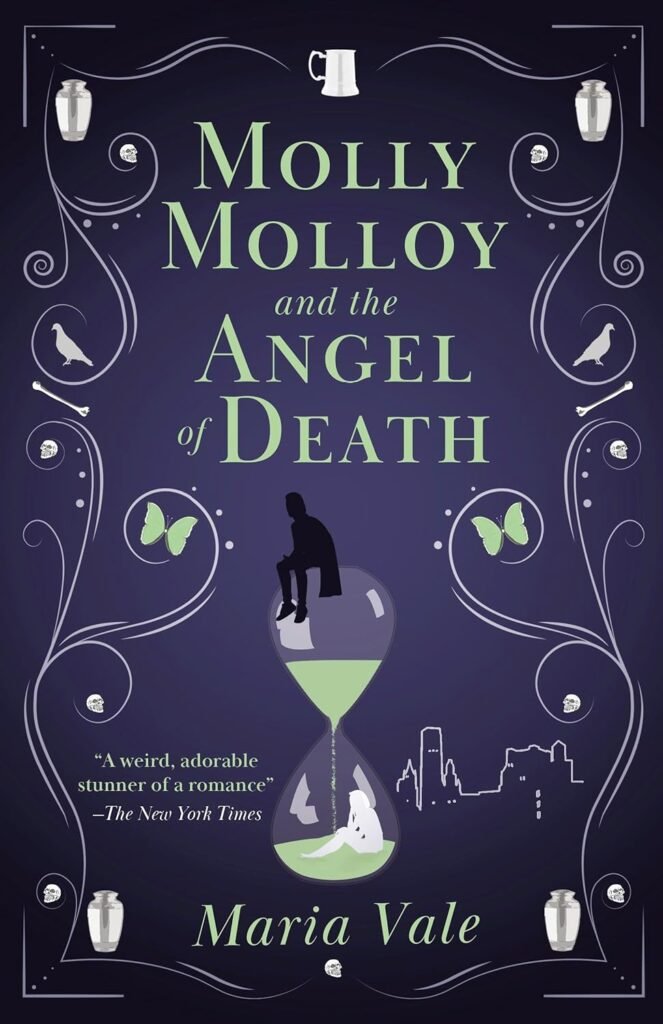
What was Maria Vale, she of the incredible shifter series The Legend of All Wolves, thinking? Who decides to make Azrael, the angel of death, an awkward and surprisingly, given his immortality, clueless romance hero? And to have him fall for his second (since the beginning of time) mistake, a mouthy, part-time stripper who struggles to pay the bills? It’s a mystery but whatever inspired Vale to write this gem of a story, all I can say is I’m damn glad she did.
As our story begins, Azrael has spent the past two hundred thousand years ushering the dead into the next stage which, somewhat off puttingly, involves their souls put through Mangles and being transformed into more or less nothingness. And lest you wonder–and I think Santa should use this trick–how one angel has managed to process the 108.234 billion people who have died since the beginning of time, Death has the ability to stop time.
In all the eons Death (the supernatural set calls him Ragpicker) has been at his job–he doesn’t really like it or the supernatural beings he reports to–he’s never been seen by a human. But, on the day he goes to collect the Rag or soul of a human with the last name of Molloy, he errs. Not only does he take the wrong one, the human whose soul he was supposed to (literally) pocket can see him–he’s inadvertently saved her from death by flaming hot chicken wing–and chats him up.
Death now has a problem. Molly, he explains to her, is supposed to be dead. Molly, understandably, would prefer to remain in the land of the living. And though Death knows he’s supposed to send Molly’s soul to be Mangled, he just can’t quite bring himself to. Initially, she’s just so entertaining–his life is one of solitude interspersed with angry lectures from his superiors. However, given time which Death has in spades (In the supernatural world, there is no such thing as time–in fact, there is a running well done joke about his peers inability to understand tense that anyone who’s ever struggled with high school Latin will love.) he, like the reader, finds himself falling head over immortal form for Molly Molloy.
Both Molly and Death, whom Molly calls Dee, are wonderfully unexpectedly leads. Death, in his marginally human form, is skinny, awkward, and absurdly enamored of cold pizza and trashy men’s magazines. He’s not especially sexy or wise and yet he is exactly what it turns out Molly (and we all) need. Molly’s morality errs on the side of pragmatic; she’s sarcastic and a better waitress than stripper. But she sees all creatures as having inherent value and her heart is big enough for two. Which is a good thing because Azrael doesn’t have one–organs are for humans not for angels.
Over the course of this fable, Molly and Dee fall in love and create a life together. They navigate both his immortality and her insistence that the rent be paid with honestly earned money with equal effort. As they live together, we readers suspect that Molly’s time will, some day, end. Will Azrael’s? And, if Molly does die, will her soul be Mangled? And does it matter? Is the point of living just to be and be grateful for the gift of human existence? Or are our souls and loves destined to be timeless?
You’ll have to read the book to see how Vale deftly answers these questions. All I’ll say is that, for me, the book has a believable, heart-breaking and remaking, joyful ending.
I loved this book. It is true that, once I’d finished it, I wasn’t sure its metaphysics held up to intense scrutiny. But who cares? There are no easy answers about what love, life, and death really mean or even are. And though this book will make you think in all the best ways, its real gift is its richly imaginative storytelling, hilariously vivid characters, and its unwavering conviction that, really, all you need is love. And maybe some very spicy chicken wings.