The Good Liar
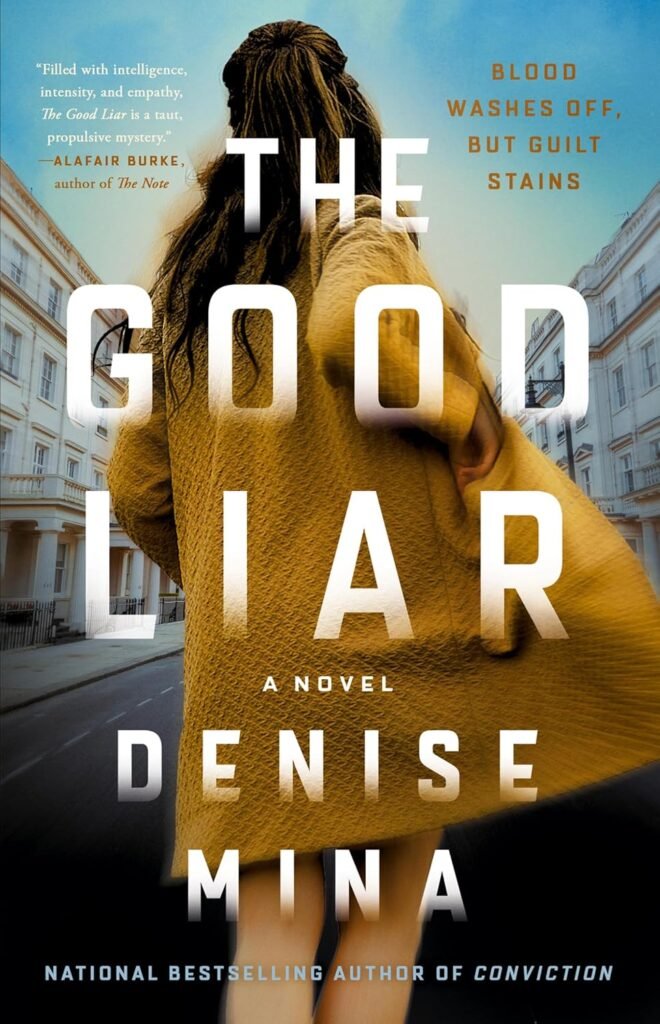
I love many of Denise Mina’s books, but The Good Liar is not one. It begins well. Doctor Claudia O’Sheil, famous forensic scientist, is preparing to speak at a glittering fundraiser. In her folder are two speeches—one that preserves the official story of a murder that occurred one year ago, one that reveals her doubts. Claudia insists she will tell the truth, though doing so will destroy not only her hard-won life but also those around her.
Next the story goes back in time to a year earlier where a Lord and his lady were brutally murdered. Claudia’s famous blood spatter technique became pivotal to the case–something she, in the present, says is a problem. Over the course of the next 250 pages–this is a short book–we travel with Claudia back and forth in time while Mina stitches together not only what happened but why.
What follows is not, however, a mystery in the usual sense. Yes, there is a murder and a trial, and the case itself is neatly constructed. But this is more an ethical puzzle set against the exceedingly awful behavior of London’s wealthy and powerful. This rather nasty world is one that Claudia has worked hard to become a part of and she cherishes her new life of privilege. Losing it–by telling the truth–terrifies her. Will she? Won’t she? The answer is clear from the book’s earliest pages.
Little about this book worked for me. The world Mina’s built here is supposed to be complex, full of science and fraud and past crimes and many miserable people doing deeply wrong things. However, in The Good Liar, the supporting cast are superficially rendered and the motivations behind most of the characters’ actions are unconvincing. Even the villains seem less like people and more like lazy stand-ins for a despised aristocracy. Despite all the book’s tragedies, it moved me not a whit and though the ending may satisfy some, I found it predictable and depressing.
I don’t read mysteries to be reminded, page after page, that the world is corrupt, that no one resists its compromises, that power always wins. While those concepts can enrich a novel, in and of themselves, well, they bore me. Mina’s prose is polished enough that I finished, but, sadly, it was a slog. For me, this one is a solid C: a novel by a brilliant writer who I hope will do better next time.