The Listeners
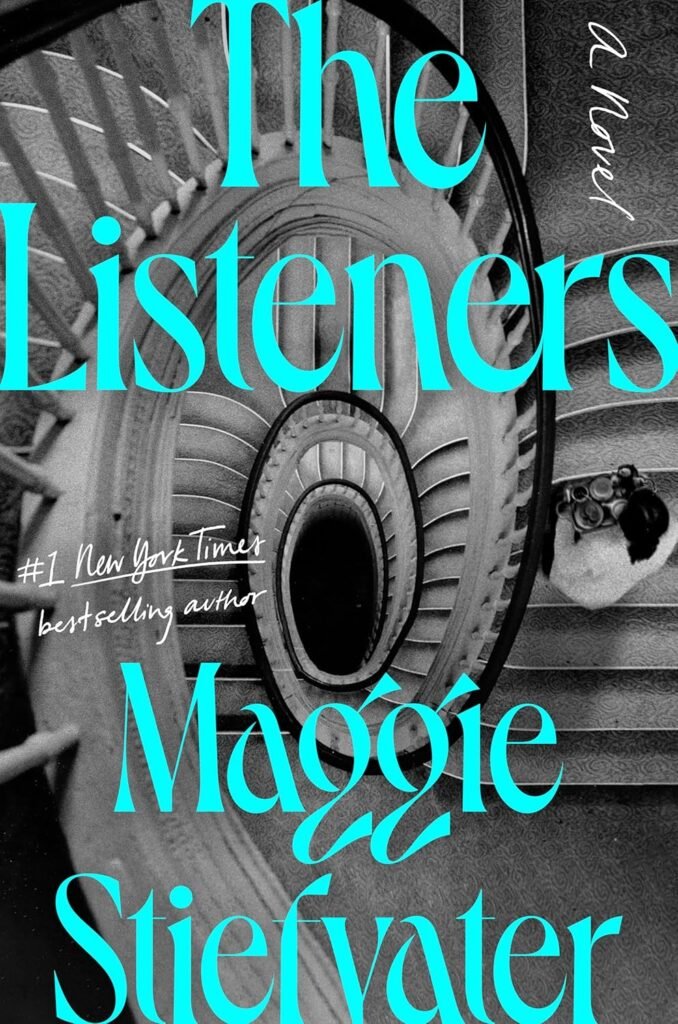
JANUARY 1942. THE AVALLON HOTEL AND SPA offers elegance and sophistication in an increasingly ugly world. Run with precision by June Hudson, the hotel’s West Virginia born-and-bred general manager, the Avallon is where high society goes to see and be seen, and where the mountain sweetwater in the fountains and spas can wash away all your troubles.
June was trained by the Gilfoyles, the hotel’s aristocratic owners, and she has guided the Avallon skillfully through the first pangs of war. Now, though, the Gilfoyle family heir has made a secret deal with the State Department to fill the hotel with captured Axis diplomats. June must convince her staff—many of whom have sons and husbands heading to the frontlines—to offer luxury to Nazis. With a smile.
She also must reckon with Tucker Minnick, the FBI agent whose coal tattoo hints at their shared past in the mountains, and whose search for the diplomats’ secrets disrupts the peace June is fighting so hard to maintain. Hers is a balancing act with dangerous consequences; the sweetwater beneath the hotel can threaten as well as heal, and only June can manage the springs.
As dark alliances and an elusive spy crack the polished veneer of the Avallon, June must calculate the true cost of luxury.
________________________________________________________________
Dabney: Over the past couple of years, I’ve become far more interested in historical fiction than I used to be. Perhaps it’s because I’ve found more books with female leads or maybe it’s because I’ve encountered reads that are NOT dual time-line, a fictional affectation I don’t love. For whatever reason, my favorite books of the past few years have been historical fiction–The Frozen River in 2023 and Eleanore of Avignon in 2024. The Listeners is already on my list of top books for 2025. For me, it was the perfect blend of storytelling, real history, compelling characters, and a nuanced view of the past.
What did you think of it?
Maggie: Frozen River is a terrific book. I would attribute all the characteristics you listed for The Listeners -the perfect blend of storytelling, real history, compelling characters, and a nuanced view of the past- as strengths of that novel. Most of my reading in recent years has been comprised of historicals set in the early to mid-20th century. I find I’ve grown particular about these stories since we both have such a plethora of information about the era that all the novels should easily capture the history of it, and because so many excellent writers are working within that milieu. This novel had a lot to live up to and I didn’t feel it quite hit the bar.
With The Listeners, the story felt almost isolated, like everything was happening in a moment detached from the rest of reality, in an area so remote the everyday world didn’t intrude upon it. The magical surrealistic element of the sweetwater and June’s strange connection to it added to that sense of irreality and pulled it even further from the history of the period. How did you feel about that element of the tale?
Dabney: I think that’s what I liked best about it! There are so so so many WWII books and, to me, they rarely show me anything new. This one, with its focus on this world apart, riveted me. The narrowness of its scope allowed me to really think about the characters, their motivations and responses to their circumstances. The larger world hovers outside the story and we know how it goes but, in the pages of the Listeners, individuals are revealed in their distinct complexity.
Maggie: Interesting! I didn’t find any of them particularly nuanced. The bad guys were bad and the good guys good, who instinctively knew right from wrong. Did you feel there was ever a possibility that the characters who were presented as morally questionable would turn out to be the heroes and vice versa? Which characters did you feel represented that?
Dabney: This is one of these conversations where I feel as if we read different books! I thought almost all the characters were nuanced. Even the leads, and especially June, make choices that were sort of iffy in some ways. And the guests, the Japanese and Germans, were fascinating to me. I was especially riveted by the story of the Wolfes, the German family whose loyalties were strained because of their daughter.
Maggie: I didn’t feel the Wolfe’s loyalties were divided; there were lines they weren’t willing to cross even for their child. They loved her just enough to want to prevent her from dying, but I’m not sure they could even see the issue beyond her to the hundreds of other lives involved. I couldn’t help but compare it to the Smith family’s dilemma in Man in the High Castle and how they were forced to confront who they are, who they were, who they should be, and all the choices that led to their present predicament. (World at War does an interesting take on the issue as well.)
There’s a strong romance here, what did you think of the love story?
Dabney: I think one of the polarizing things about this book–which I liked–is that the Germans and the Japanese were portrayed more sympathetically than one usually sees in fiction about WWII. So, it’s true they didn’t care about the many many lives their nations were wreaking havoc on–they only cared about their own families. That was interesting to me–I’m always curious about the inner workings of the other.
I liked the love story–and there are really two. I thought the point of both of the men in June’s life was to show her path to understanding what was right for her, both in her personal life and in her professional one. Her romances added heft to her story.
Maggie: We’ve had very different reading experiences. I can remember only a handful of books where the Germans weren’t shown as capable of caring for their own family and friends, but they are almost always portrayed as not being able to care beyond that and see the humanity in others that aren’t exactly like them. I definitely saw some of that here in how the diplomats treated those from even their allied nations, which I found surprising. I’ve always thought of diplomacy as the art of reaching past cultural barriers.
Regarding the romance,I felt that the book showed one of June’s suitors in an extremely negative light. He was presented first as a coward, afraid to go to war, then a backstabber who had sacrificed the hotel and its staff to meet his own needs, a womanizer whom she accepted a gift from with a skeptical belief that it had been intended for another of his paramours and then his final proposition was so full of self-interest that it made Mr. Darcy’s original proposal seem warm, romantic and effusive in praise. What, aside from the wealth, did you think made him a good suitor for her?
Dabney: I didn’t make myself clear. One of the suitors is not a good guy and the other is. What I liked is that the focus was on June and how interacting with those men taught her about herself, her values, and what her life’s effort at the Avallon truly meant.
Maggie: Ah! That makes sense. I agree that meeting Tucker and the diplomats helps her really see the world beyond the Avallon. Speaking of which, I felt the Avallon and the sweetwater congruent to it were characters in and of themselves. The Avallon had the same presence for me as the abode in a Gothic typically does, with possible ghosts, the peculiar magic of the sweetwater, and the huge role it plays in all our character’s lives. What did you think of the hotel itself? Would it be a destination you would want to stay at?
Dabney: One of the places the actual diplomats were housed in this era is in the Grove Park Inn, a place I’ve stayed at once and visited many times. So, as I read the book, I kept imagining that hotel which is huge and glamorous and lovely. So, yes, I think I’d love to stay in the Avallon.
However, the sweetwater concept–let’s let readers find out about that component on their own–certainly makes the Avallon a singular place. The sweetwater was, for me, the weakest part of the story although I still enjoyed much of it. What did you think of the magic in the book?
Maggie: I felt it detracted from the story. I like fantasy, magic, and other paranormal elements a great deal, but only when they are used to clarify the story and showcase what the author is trying to tell us. In The Listeners, I thought it pulled focus away from the reality of the circumstances of people who didn’t much like each other being locked up together as a life-and-death struggle in which they had no control took place between their countries. Such a situation would be fraught with tension enough without magic.
If I were to define this story, I would call it either a working class delayed coming of age or an awakening tale, in that much of the story’s focus is on June taking another look at her life and realizing she is in a moment where she may want to make changes. Would you agree that is where the focus is?
Dabney: Um… maybe? It feels like historical fiction to me. I learned so much about a slice of WWII that I didn’t know before. June’s growth is key, yes, but why I couldn’t put this book down is due to its illumination of a very odd and particular moment in time.
Maggie: I had a bit of the opposite feel. This is what I call a night stand book – good while you are reading it, but easy enough to put down and get a good night’s sleep. I would give it a B, more for effort than execution. I’ve read other WWII books which examine those torn between honor and patriotism which I felt did a better job of capturing the full nuance of being torn between duty and decency. What would you give it and why?
Dabney: It’s a DIK all the way for me. The world building was immersive and unique and all the characters interesting and distinct. I thought the prose was gorgeous. But, perhaps most of all, I loved how it didn’t, overall, demonize the Japanese and the Germans. At this point in my life, I find black and white characterizations of people and movements more than useless–I’d argue they’re harmful. I loved that, in The Listeners, Stiefvater seems to be saying that we are all capable of many things–she deftly uses the analogy of the sweetwater–and that to see someone and believe we know their truths and their worth is often, at best, at misapprehension and, at worse, a danger to the larger world. This is a book I will be recommending to many–I’m hoping they like it better than you did!