Addicted
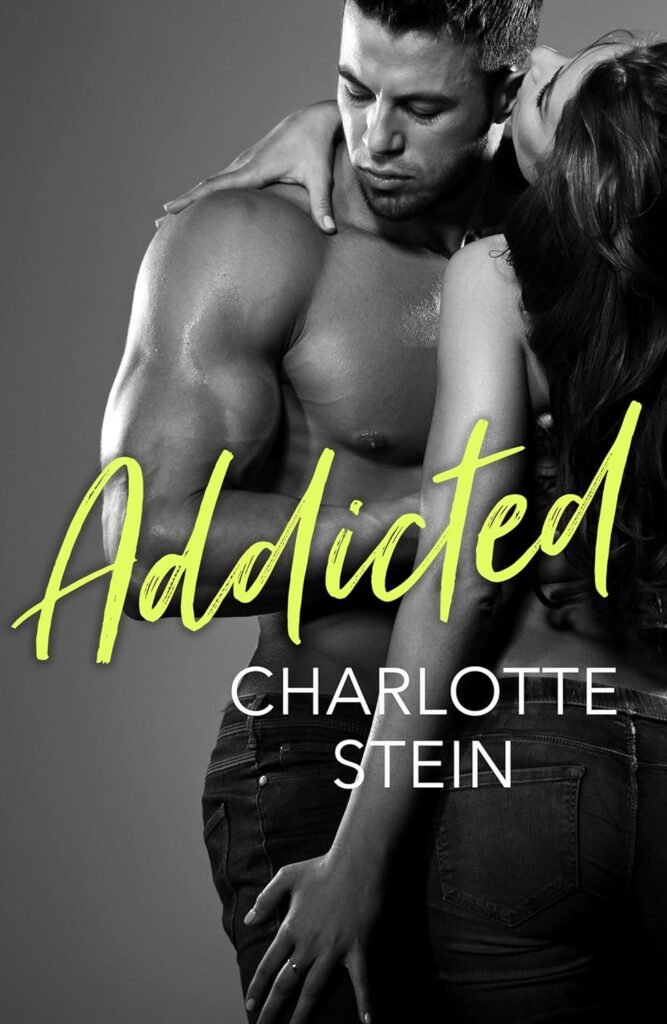
Charlotte Stein doesn’t write predictable love stories, and Addicted is no exception. It resists easy classification. The book is erotic and introspective, crude in places but surprisingly gentle, and uninterested in tidying itself up for mainstream comfort.
Kit Connor is a librarian and aspiring erotica writer with more imagination than experience. Her first draft is, according to her best friend, a disaster—too stiff, too cautious, and completely unconvincing. Kit’s problem isn’t her prose. It’s that she doesn’t understand desire well enough to write about it. Her past encounters have been perfunctory. If she wants to write about sex, she needs to feel it. That’s how she ends up in a support group for people with “sexual issues,” thanks to a friend who meddles under the banner of support. Kit doesn’t believe she’s repressed. She just doesn’t see what the big deal is.
Then Dillon Holt speaks.
While others mumble, Dillon goes off. His descriptions are explicit, relentless, and disturbingly fluent. Kit is mesmerized. Thus, after the session, when he hears about her novel, when offers to help–for research, he says–she startled herself by saying yes.
They agree to act out the scenes she’s writing, chapter by chapter. What starts as an experiment quickly becomes something more charged and less controllable. Dillon pushes her into unfamiliar territory, and Kit, unsteady but curious, begins to respond. He is open, wildly so, about getting down and dirty, but otherwise closed off. At first, Kit’s OK with that, but, over time, Kit begins to want more than sensation. She wants substance.
The story unfolds entirely through Kit’s point of view. Her voice is sharp, awkward, and self-aware. She is both observer and participant, constantly checking her reactions against what she thinks she should feel. Dillon, seen only through her eyes, is a contradiction—confident in his body, evasive with everything else.
The sex is explicit, but always grounded in character. As the scenes progress, the encounters shift from performative to personal, revealing not just chemistry but growing ease. Dillon talks a lot, often to deflect, but Stein lets his words falter in the right places. Kit, caught off guard by her own responses, begins to pay closer attention—to him, and to herself. The humor cuts through tension without deflating it, and the emotional progression feels natural, not scripted.
Though built on erotic momentum, Addicted delivers a full romance. Kit learns that wanting isn’t the same as knowing, and Dillon learns that telling a story isn’t the same as being honest. Neither revelation arrives neatly, which is why the ending feels like a true resolution rather than a pivot.
This is not a tidy book, but it is a romantic one. It begins with a proposition and ends with a choice. What makes Addicted worth reading isn’t just the heat—though it delivers that without flinching—but the way it treats intimacy as something worth grappling with. Stein takes sex seriously, not as shock or spectacle, but as language: messy, revealing, and often more honest than anything her characters manage to say out loud. The result is an unexpected love story. And it’s lovely.