Beautiful Ugly
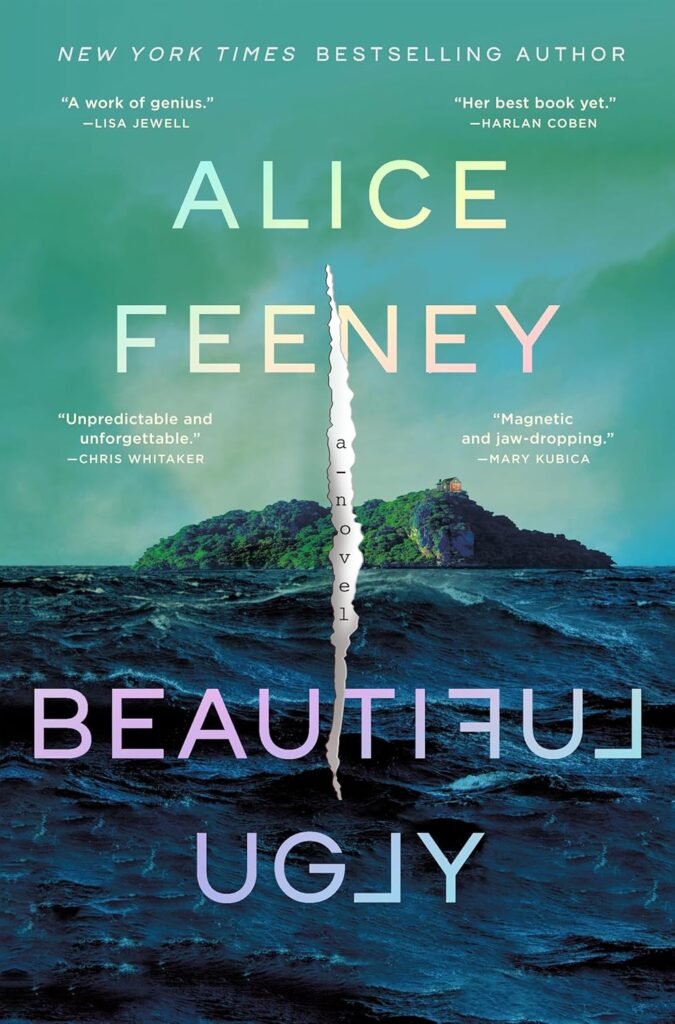
I am so over the big twist. You know what I’m talking about, right? They’re as common in thrillers today as six packs are in contemporary romance. These end of book revelations are so improbable, so wildly unearned, that, annoyingly, they become the only thing you remember about a book. Feeney’s lastest, Beautiful Ugly, is a story that attempts to galvanize with its inconceivable shocking reveals but, instead, frustrates. It fails to provide characters worth caring about or a plot that holds together under the faintest scrutiny.
The story begins with Grady, an author haunted by the disappearance of his wife, Abby, who vanished a year ago after stopping to help a woman on the side of the road. Her car was found abandoned, and Grady has been unraveling ever since, unable to write, sleep, or move on. His agent offers him a retreat on a remote island in the cabin of a beloved (and conveniently deceased) author, in hopes the isolation will inspire him to rebuild his career.
The setup has the bones of an intriguing psychological thriller, and for a bit, I was enjoying myself. There was atmosphere and suspense until there absolutely wasn’t. Grady becomes impossible to root for, and the more I learned about Abby, the less I wanted to. By the time the island’s secrets began to emerge, my patience for the book’s hyped up melodrama came to a screeching halt.
It’s always hard when you don’t really like anyone in a novel. But when those unlikeable souls are plopped into a plot that’s a tangled mess, one which relies on absurd coincidences and baffling character decisions, well, that sucks. This story is riddled with so many loose ends and unresolved subplots that I wondered wonder why they were included at all.
And what about that twist, you ask? It’s a bummer–when it finally arrives, it is as preposterous as it is inevitable. It’s not enough for a twist to surprise—it needs to make sense within the framework of the story, to feel like a revelation instead of a stunt. Here, it felt like the author threw everything at the wall to see what would stick, sacrificing believability in the process. It’s made even worse by the author’s weak sauce final act which feels more like a desperate patch job than a clever resolution.
I think Feeney may have been trying to say something about female rage, relational betrayal, and fate but I didn’t care–I was too irked by the dumb plotting.
Would I recommend it? Only if you enjoy dismantling a book’s many flaws as you read. Otherwise, there are better ways to spend an afternoon—preferably with a book whose thrills don’t rely on a WTF twist.