How To End a Love Story
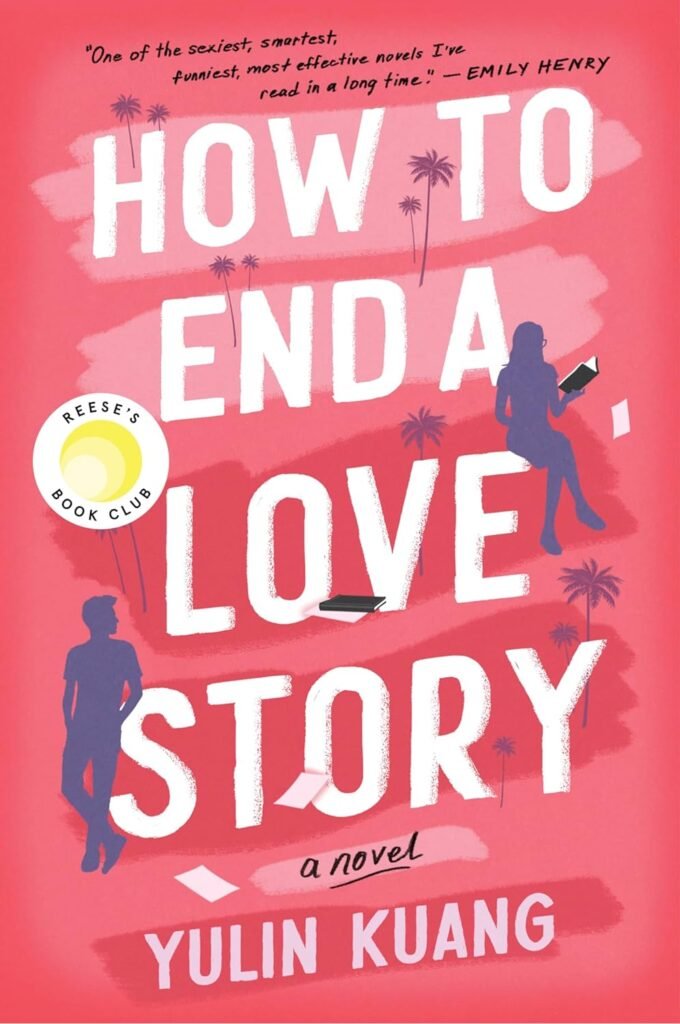
How to End a Love Story is billed a romance shaped by grief and healing. It delivers a shallow, joyless hash instead. I’ve read it–you probably shouldn’t.
This is a romance that begins with a funeral that is just about the worst meet cute terrible I’ve ever read. Then, thirteen years later, our leads, (I found them both blah) Helen Zhang and Grant Shepard, are back together as forced colleagues in a Hollywood writers’ room. It’s possible a great writer could have turned this into a romance with depth. Instead, their story is depressing and shallow, truly a loser combo for love.
Why? Well, if I were suddenly falling for the guy who–and this is not a spoiler, you find this out in the start of the novel–ran over my sister’s body after she committed suicide, I’d have a very hard time. Ditto were I the man who’d squashed the sis. If we were–and there’s a snowball’s chance in Key West of this–to start boning, we’d need to talk, really talk, about the past, our guilt, shame, anger, and hope. Sadly, Helen and Grant do none of those things. They, horny and hapless, avoid all conversations until one day, Helen takes an edible and then–and maybe I should take more edibles?–feels such overwhelming lust for Grant that the two fall into bed and begin banging like there’s no tomorrow. (It’s a grim book–read it and you’ll wish there was no tomorrow….)
Now, maybe, if this were well-written, I’d have cut it more slack. But it’s not. Dialogue is awkward, cliches abound, and phrases–poorly done–appear again and again. The sex scenes are cringeworthy. Scenes skim the surface, every feeling is told, not shown, and the book itself feels incomplete, as though the author simply never gotten around to writing the whole thing.
I found the first third icky, the middle third boring, and the last third annoying. As the plot careens to a close, there’s an instantly resolved big conflict, a remarkably unmoving scene in a hospital, and don’t even get me started on the unearned happy ending.
And yet, this won Goodreads Debut of the Year. Why? This is a book that side eyes joy. It’s message seems to be that the path to true love has to be so miserable that hey, if you’re single, you’re actually one of the lucky ones. Look, if I wanted to be bombarded with the belief that love sucks, I’d rather just listen to the J. Geils Band.
How to End a Love Story mistakes pain for meaning and a bunch of orgasms for love. It flirts with big themes—grief, guilt, healing—but addresses these superficially and without believable hope. True love maybe hard to write in 2024 but it deserves better than How To End a Love Story. So do we.