
Scotch on the Rocks
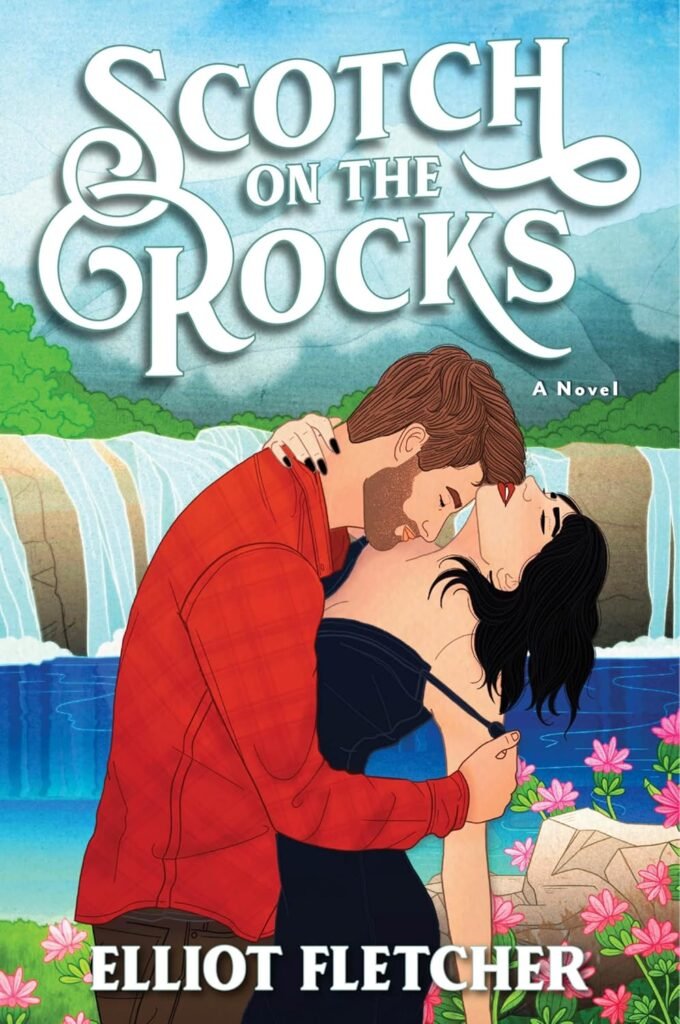
I love this book. It’s sexy, very funny, moving, grounded in its sense of place, and just—well—yummy. It’s easily the best contemporary romance I’ve read this year.
Callum Macabe met Juniper Ross on a train from Edinburgh to Glasgow and fell for her before he realized who she was: his younger brother Alistair’s girlfriend. Two years later, after her adopted father died and her engagement ended, they crossed paths again in Glasgow. They nearly slept together. Callum pulled away, convinced she would never see him as more than the consolation prize.
Another year passed. Then five more.
Now Callum is back on the Isle of Skye—temporarily, or so he keeps telling himself. He’s the village vet, the man who can stitch up a sheep before breakfast and still remember your dog’s name. But he’s really come home to help his mother care for his father, whose Alzheimer’s is worsening by the day. He hasn’t told his brothers or sister how hard it’s gotten. He doesn’t want to bother them. That silence isn’t noble; it’s isolating. And the longer he stays, the harder it becomes to pretend he doesn’t want more—from the town, from his family, and especially from June.
June, now thirty, helps run the Ivy House Inn and avoids Callum with a precision that suggests practice. They fight whenever they speak—sharp, absurd, often hilarious arguments that have become their signature. Everyone in the village sees the chemistry. They refuse to admit it. June grew up in foster care and learned early not to count on anyone. Even now, with a loving adoptive mother and neighbors who clearly care, she keeps herself apart. The drumbeat in her head says she’ll always be the one left behind. The book never reduces that to backstory. It’s baked into her instincts, her pride, her refusal to ask for help—even when she’s drowning.
When her mother leaves on a singles’ cruise, June finally starts the renovations she’s long wanted—but nothing goes smoothly. The inn springs leaks, the bills spiral, and June tries to handle it alone. Callum offers help in exchange for something that looks like companionship but smells a lot like courtship: trips around Skye so she can better recommend the island to guests. She agrees. Not because she wants his company. Because she already has it, whether she admits it or not.
This isn’t a “grumpy/sunshine” pairing. June isn’t grumpy. She’s cautious, private, and deeply self-reliant. Callum isn’t sunshine. He’s charming, yes, but it’s a charm built to keep people from looking too closely. She’s exhausted by pretending she doesn’t care. He’s exhausted by pretending he doesn’t need anything. What makes them work isn’t contrast—it’s recognition. They know what the other is hiding because they’re hiding the same things.
When June and Callum finally touch, it’s not tender. It’s reckless and hungry and long overdue. They don’t ease into it—they lunge, all sharp edges and pent-up wanting. It’s not clean or careful, but it’s exactly right for who they are and how long they’ve tried to pretend it wasn’t going to happen. The sex is intense, but what makes it unforgettable is what’s underneath: years of resentment, longing, and the terrifying relief of finally giving in.
Callum’s family—especially his father’s decline—is handled with restraint and precision. His refusal to ask for help is maddening, but entirely in character. When his siblings finally find out how bad things have gotten, they’re furious. Not because they’re hurt, but because they were never given the chance to step in. The novel allows that anger to breathe, which makes the eventual repair feel honest.
The past with Alistair isn’t erased. It mattered. When he shows up after six years, it’s not a plot twist—it’s a reckoning. He isn’t a villain, and he isn’t excused. He’s a man who left without explanation and now wants answers he may not be entitled to. The confrontation is emotionally thorny, and the resolution is exactly what it should be: not easy, but final.
The village of Kinleith is beautifully drawn—lush without being twee, full of gossip and charm and the kind of quiet community that doesn’t always ask nicely but does, in the end, show up. The sense of place is real. It never tries to sell you on a postcard version of Scotland. It lets you believe these people live here. You understand why they stay.
June has a rulebook. She wrote it after her heart got broken:
-
Don’t look at a Macabe brother.
-
Don’t talk to a Macabe brother.
-
Don’t even think about a Macabe brother.
She breaks all three.
And thank God she does.