
Someone Knows
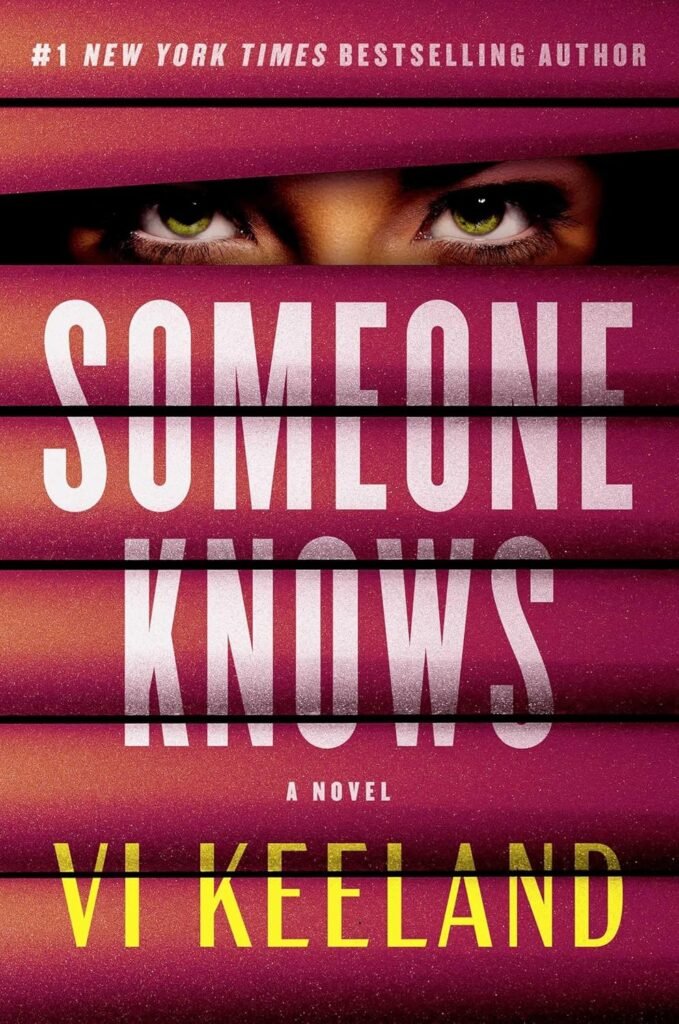
Vi Keeland, a powerhouse in romance, turns to thriller with Someone Knows, a novel that is fast, engrossing, and, in the end, deeply frustrating.
Elizabeth, a mid-forties English professor, has spent decades keeping people at arm’s length. Men find her irresistible—an ongoing theme the novel never lets us forget—but she lets no one in, save for the one person who has always been there: an aging friend in a nursing home, the man who helped her escape to New York after she killed their high school English teacher, Mr. Sawyer. The murder wasn’t a mystery, not to Elizabeth—Sawyer was a predator, abusing her best friend Jocelyn. She did what she had to do. But now, someone knows.
The novel’s most compelling force is uncertainty. Elizabeth isn’t just haunted by the past—she’s being rewritten by it. An anonymous student, Hannah, sends her novel chapters that recount, in eerie detail, what happened twenty years ago in Minton Parish. But who, exactly, is confessing the truth? Elizabeth? Someone else? And how does Hannah know so much? The reader needs those answers, and the steady drip of information keeps the tension high. But then a major mid-book twist changes the equation, dulling the impact of what had been the novel’s sharpest tool. What was once gripping starts to feel mechanical, its revelations less urgent.
Enter Noah. From the moment he appears, he wants Elizabeth—badly. They fall into bed almost immediately, and while their first encounter crackles with tension, the rest of their sex scenes feel like stylish distractions, designed more to keep the reader guessing than to serve the story. One, in particular, is downright implausible. I’m all for well-placed steam, but here, the sex feels more like a smokescreen than an organic part of their relationship.
Some leaps in logic are impossible to ignore. Elizabeth is supposedly employed, yet she spends weeks sleuthing in Louisiana with no professional consequences. The book also plays fast and loose with technology, hinging on Elizabeth’s inability to answer questions that a quick Google search would resolve. The gaps aren’t just frustrating; they make it hard to stay immersed.
And then there’s the ending. A thriller doesn’t have to wrap up every detail in a tidy bow, but a mystery must solve its own mystery. Someone Knows doesn’t. The resolution isn’t just ambiguous—it’s missing. Instead of clear answers, the book offers murkiness, withholding key information and leaving too much unresolved. A good mystery should snap into place in the final act, revealing how the pieces fit together in a way that feels inevitable. This one withholds the very thing the reader has been chasing. It’s not ambiguous in a clever way—it’s frustrating, unfinished, and, worst of all, feels like a setup for a sequel. In a genre built on resolution, that’s a betrayal.
Still, Someone Knows is the kind of book you devour in one sitting. I had to know what happened next. I just wish the answer had been more satisfying.