The Art of the Lie
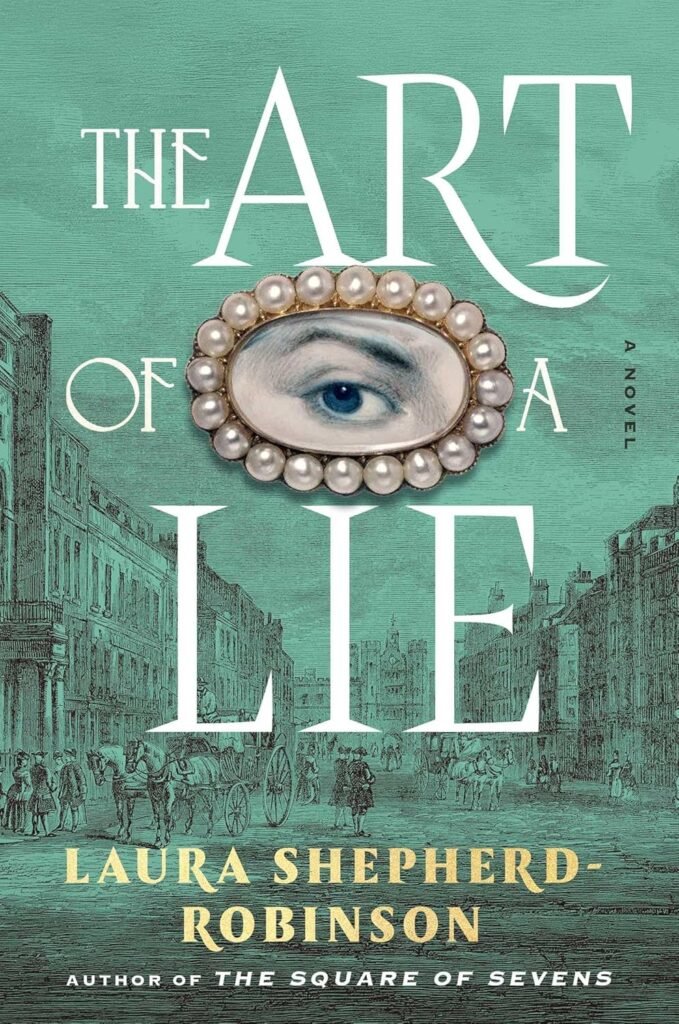
Set in the ruthless, chaotic heart of 1749 London, this historical thriller is a masterclass in deception, survival, and the art of the long con.
Hannah Cole, newly widowed and barely keeping her confectionery shop afloat, knows better than to expect miracles. Her late husband, Jonas, left her with debts, dwindling options, and, worst of all, a fortune she can’t touch—money Henry Fielding, novelist-turned-magistrate, is convinced was earned illegally and intends to seize.
Then William Devereux walks into her shop. He is polished, persuasive, and, to Hannah, a godsend. He claims to have been a friend of Jonas’, but more importantly, he offers her a way forward: Iced cream, the Italian marvel that could make the Punchbowl and Pineapple the most fashionable shop in London. Hannah isn’t immediately convinced, but desperation makes for an open mind. And Devereux? He’s playing a longer game, one neither Hannah nor the reader initially sees.
This novel spools out in two-person POV which is one of its greatest strengths. Hannah and Devereux are equally formidable, and the story’s pleasures lie in watching them outmaneuver—and deceive—each other in ways sympathetic and not. Hannah, trying to hold her business and her life together, stumbles into the labyrinth of Jonas’ past. With Devereux’s reluctant help, she ventures into a world where fortunes change hands in an instant, and power belongs to the most ruthless. And while she’s learning the rules of deception, Devereux is playing a game of his own.
On the heels of both is real life author and lawman–he wrote Tom Jones and started the Bow Street Runners– Henry Fielding, a man both brilliant and blinkered. He is certain that Jonas was up to no good—he’s right—but as he digs deeper into the man’s murder, his suspicions land dangerously close to Jonas’ friends and family. Fielding isn’t wrong, but he isn’t entirely right either, and his dogged pursuit of justice makes him both ally and obstacle.
The supporting cast is just as sharp. The bevy of criminals who aid Devereux in his byzantine cons, the workhouse help in Hannah’s shop, even the nameless figures in the gambling dens—every character crackles with distinctiveness and verve. The novel’s historical details are just as immersive, with the making of iced cream—salt and ice creating an endothermic reaction that freezes the cream—serving as both a fascinating process and a perfect metaphor. Hannah and Devereux’s interactions are their own chemical experiment: pressure applied just so, yielding unexpected results.
This book is clever, immersive, and ruthlessly well-plotted. It doesn’t just tell you a story; it pulls you into the smoke and sugar of 18th-century London, tempts you with every deception, and leaves you marveling at how expertly you’ve been played. I loved it.