The Gods Time Forgot
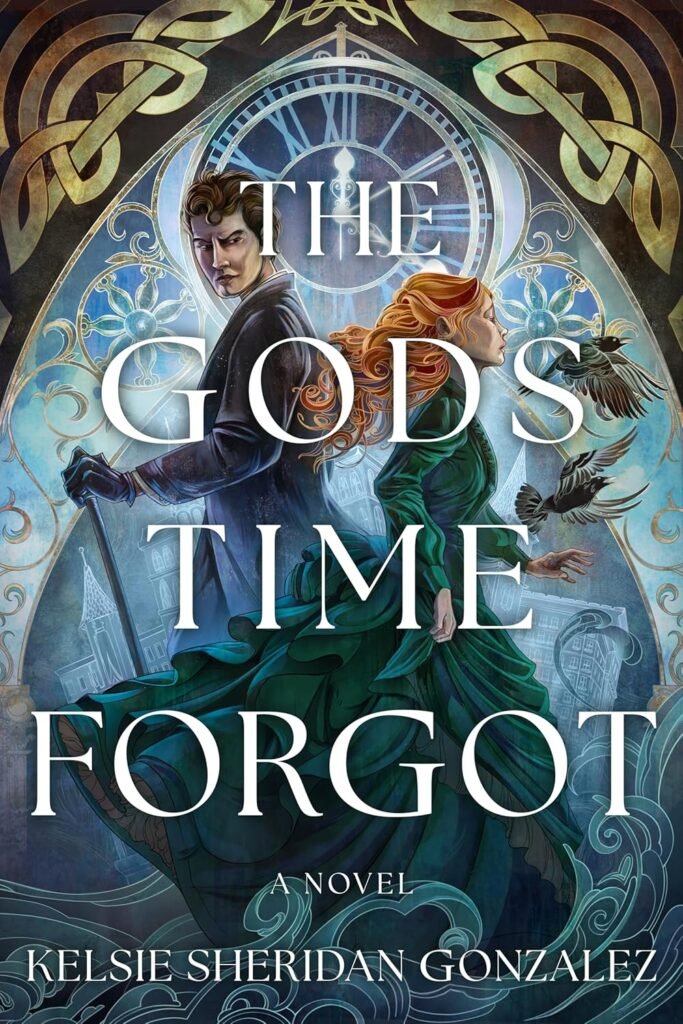
Mythology is a long-time love of mine, especially when it collides with history. Add in a Gilded Age backdrop, and I’m already halfway to devotion. So when I read the description of The Gods Time Forgot—a historical romantasy where Irish mythology entwines with turn-of-the-century Manhattan—I had high hopes. I finished it deflated. What begins with a compelling concept gradually loses its grip, unraveling into a story too chaotic to enjoy and too muddled to admire.
The novel opens mid-crisis: Rua, our protagonist, claws her way out of a cave, gasping for air and haunted by the name “Emma,” which echoes around her but means nothing. She has no memory, no bearings, and no explanation for why she can survive a toxic spring that would kill anyone else.
She soon learns that she is the exact image of Emma Harrington, a missing heiress from a nouveau riche family straining for acceptance in New York society. With no other options, Rua steps into Emma’s life, hoping that playing the role will help her piece together her own. But Emma left behind more than a wardrobe of silks and secrets. Her latest scandal—emerging from a poisoned spring that killed a man—has jeopardized the Harringtons’ social ambitions, and her return only heightens the tension. Her mother, brittle and ambitious, makes it clear: one misstep, and Emma will be committed to an asylum.
Rua quickly discovers that Emma’s troubles run deeper than debutante misbehavior. With the help of Mara, Emma’s maid, Rua begins to uncover threads of dark Celtic magic connected to the Morrigan, the triple goddess of war, fate, and sovereignty. The mythological stakes intrigued me. The Morrigan is rarely used well in fiction, and I appreciated the ambition. Was Rua an ancient goddess? Could Finn, the brooding Irishman she meets, be a modern incarnation of her legendary rival, Cú Chulainn? My curiosity was piqued.
Unfortunately, the story doesn’t reward the interest it initially garnered. Rua is an exhausting protagonist. Her choices are erratic, her reactions disproportionate, and her emotional register seems to shift based on what the plot needs, rather than what the character has earned. The idea of a war goddess forced to pose as a Gilded Age ingénue should offer texture and tension. Instead, we’re left with a heroine who careens from sulky to impulsive to incongruously fearless, sometimes within the same scene. She can be sharp-witted, and her verbal barbs occasionally land, but her volatility made it difficult to feel invested in her journey.
Finn fares slightly better. His desire to build a life in New York and his discomfort with the city’s crass ambition felt promising. But his attachment to Emma/Rua lacks heat or depth, and his blind spot for the transparently cruel woman he’s courting strains credibility. For a love story rooted in fate, theirs feels oddly transactional—two characters acting out roles in a story that never earns their connection.
There’s also a secondary plot involving Mara that might have worked if it hadn’t been so heavy-handed. It becomes obvious early on that she knows far more than she lets on. The eventual reveal lands with a thud because the novel has spent hundreds of pages telegraphing a twist it treats like a surprise. Instead of a sense of culmination, I felt like I was watching the book catch up to its own shadow.
On a structural level, the novel suffers from pacing that lurches rather than flows. The first act holds promise, but the momentum dissipates. Crucial revelations are delayed until their impact has dulled, and the prose often loops back on itself, repeating ideas and images in ways that feel more careless than deliberate. The fantasy elements, which should elevate the stakes, remain thinly sketched. The romance, meanwhile, lacks emotional resonance.
Romantasy, when done well, offers more than just a collision of genre elements. It brings forward longing, magic, risk, and reward. The Gods Time Forgot wants to be epic, but it ends up feeling approximate—like a myth retold without conviction. I admire the ambition behind the book, and there are glimmers of something sharper and stranger beneath the surface. But the execution falters, and I can’t recommend it.