The latest–always interesting and worth your time–Romancing the Data report is explicit. Last month, Amazon’s Kindle Store added 34,467 new romance titles. Of the Top 100 bestsellers, 63% were self-published, 12% came from the Big Five, nearly three-quarters were in Kindle Unlimited, and the average price was $5.87. Romance is now a marketplace where Amazon—and especially KU—dictates what rises, and what rises there defines the genre.
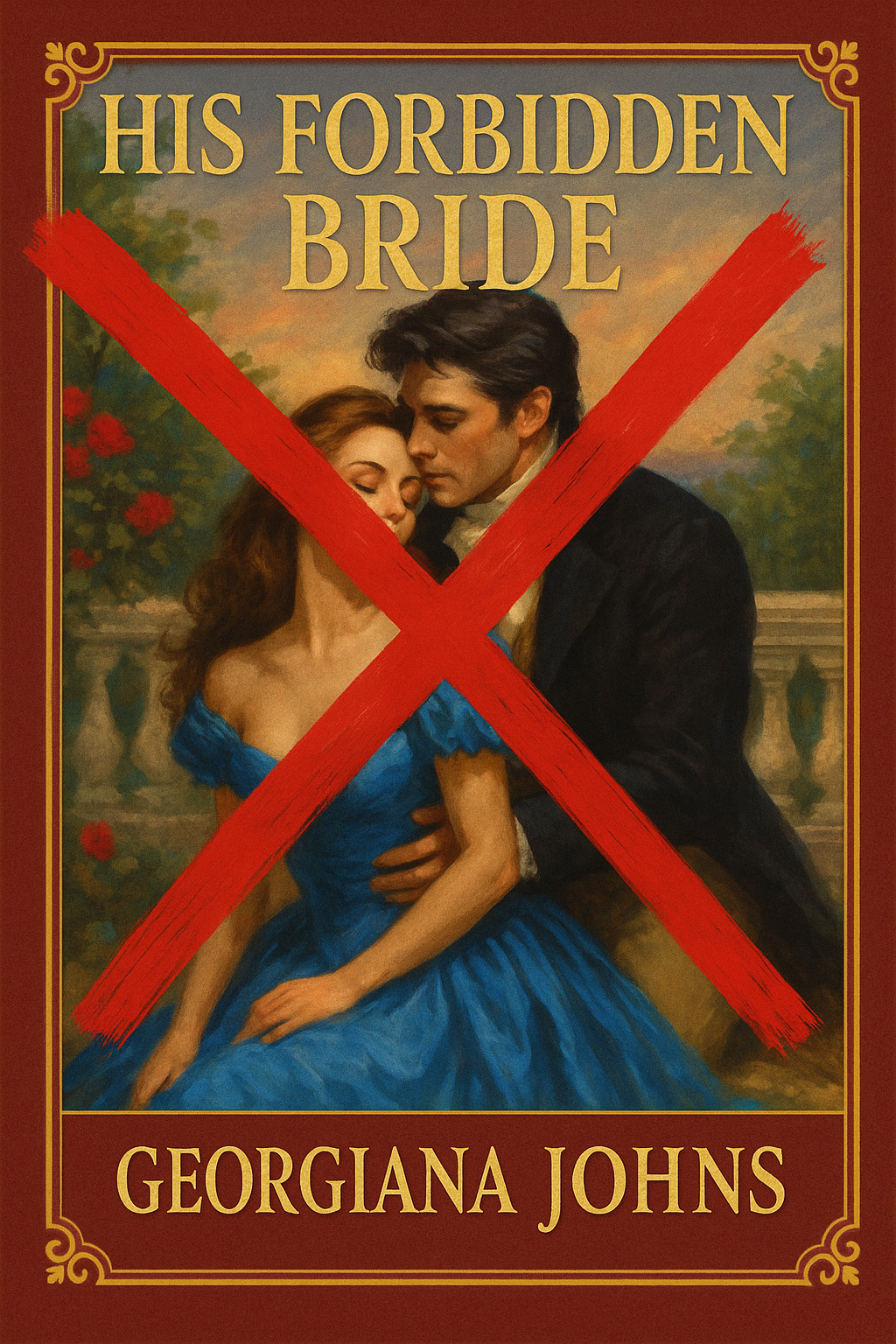
The results are staggering. Contemporary romance–mostly mafia, sports, small town, and rom-coms–makes up 67% of the Top 100, and romantasy takes another 25%. Historical romance accounts for about 2% of the Top 100—a statistical blink in a field it once anchored. (Subgenre tags overlap, but the takeaway is the same: historical romance is functionally absent.)
That’s not the only big change. Eighty-four percent of the Top 100 are written in first person. I suspect this is because first person offers immediacy and a less complicated emotional register which is well suited to KU’s binge model. Third person holds little sway over modern romance readers.
Yes, print still matters—it commands around 40% of romance unit sales—but its story is narrow. Colleen Hoover and Emily Henry currently command the vast majority of print romance, while the real growth is in romantasy: writers like Rebecca Yarros and Sarah J. Maas move millions in collectible editions. It’s safe to say that print sustains the genre’s stars but digital is what most readers buy.
Taken together, the data shows that KU’s incentives, the rise of self-publishing, the surge of romantasy, and the tilt toward first person have reshaped the field entirely. The qualities that made historical romance the genre’s grand dame—layered context and a panoramic story told in third-person—are precisely what the majority of today’s readers aren’t interested in.
This reality disappoints many AAR readers. And, no, this data isn’t a judgment on quality. The charts show that complex, third-person novels—books that take time to write and patience to read—are not what today’s romance readers want. Personally, I’d love nothing more than a renaissance for historical romance; but for now, it seems the market has closed the cover on that chapter of the genre.

hmmm… alright, I’m officially out of sync. I’m not into romantasy and don’t read a lot of contempory romance. I’m sad to see the demise of historical romance because that is my bread and butter reading. I’ll admit I’m not sad to see that Dukes are out because really how many dukes are there? i admire authors like Carla Kelly who can write perfectly good historical romances about people who work for their living, with only the occasional title among the main characters. While some of my favorite historical romance authors have either gone on to do other things or have slowed down their output, I’m still finding historical romances to read and new to me authors. I have been digging into authors’ backlists though. I’ve also turned to reading more mystery, historical fiction, nonfiction, and the odd piece of old or modern literature. So I’ll just keep reading what I enjoy and who cares what Kindle Unlimited says is trending.
What a shame I love romance that is complex with flawed characters no matter what sub genre, that is out I guess. And I dislike books written in first person as well.
I miss writers like Anne Stuart, Sherry Thomas and Meredith Duran.
Me too!
Same!
I’ve always prefered third person, past tense. In the beginning of my romance reading journey I would skip most books in 1st person, especially 1st person present tense. I still grind my teeth, but since so many, many books are written in 1st person present, I’ve given up my firm stance against reading them. I’ve read so many now that it usually only takes a chapter or so for me to stop thinking about it.
As for the rest, I’d be happy to look at other genres. I used to read mainly mysteries, and I wouldn’t mind finding some really good mystery writers I’m not familiar with. I’ve enjoyed a few cozy series, but mostly they don’t work for me. And I don’t like a lot of on page violence or being in the mind of a killer, so I also don’t read many suspense or thriller books. I keep trying new mystery books, but haven’t been wowed much.
I do read some contemporary sports romances, but many of the contemporary romances I read are romantic suspense stories. The only print books I read are books from the library. I don’t have room for more books.
For me, first person is just too limited. I like to read different perspectives in a book and I tend to think that one person’s view is just that. But that’s just a stylistic choice not one that necessarily has anything to do with critical quality.
They usually try to have POVs from all the main characters (two or more). It may backfire though. For instance, Zodiac Academy (9+) books have multiple main characters, so they start with only two (the female leads), but by the end, they expand to 18 or so. The last books are more epic, so I suppose they felt the need to do it, but half of them felt unnecessary or confusing.
I’ll read first person but to me the only advantage of this is the ability to withhold information from the reader in a more plausible manner. Like if there’s some big reveal about how one of the characters feels. I enjoyed Marianne Zapata’s Kulti, which uses 1st person, but beyond that, I can’t think of a single favorite I enjoy with this POV. I’d also argue that it paradoxically can be harder for a new writer to master, especially if they’re doing dual POV 1st person, because the two voices have to sound different.
As a fantasy reader for 45 years and a romance reader for 6 years I am yet to find adequate romantasy… they usually fail on the world building and reasonable character actions fantasy part.
I couldn’t care less about the, “person” or, “tense” as long as I get dual PoV (authors often, “cheat” on non PoV character’s actions and motivations if they don’t have to show them explicitly).
I prefer historical and have noticed its increasing then total absence from Goodreads’ end of year polls so nothing here surprises me.
I’m not too into mafia romances but I’ll take the changes any of those categories bring; too many dukes for too many years!
I don’t know that the changes in what type of romance sells is a reflection of changing tastes so much as it reflects the fact that now we get to choose what we read. Back in the days before ebooks I used to read a lot of historicals but I found few of them truly emotionally satisfying; it’s just that was all that was available.
I used to yearn for more unconventional characters and storylines (my God, did I get sick of tortured aristocratic rakes and heroines who were either feisty or martyred) but the publishers thought they knew best.
Now we can read what we want because self-publishing freed authors to extend the boundaries of the genre. I don’t read as much romance as I used to 20 years ago but what I do read hits the emotional sweet spot far more often.
That’s great. Everything evolves and the evolution of romance clearly works for many. Which is a good thing!
I think that’s true in the general market because certain subgenres, such as “closed door” romance, “clean/proper romance,” or Christian romance, have huge fans of historical romance, especially the Victorian and Regency eras. In those circles, historical romance is still enjoying excellent health.
Curiously, the third person is also in good health in many of these books, also in indie fantasy romance.
That KU controls the market doesn’t surprise me. That, however, might have little to do with the desire to read KU books and more to do with finances. If I am looking for a “throw-away” read, something to just pass the time with, I will go to KU. It’s the cheap alternative. I’ll also add that those KU readers are probably people who got addicted to those books early on in the KU timeline because that’s what KU was publishing. For quite a few years, trad publishers forced niche romance into alternative publishing options. The irony is that those alternatives (KU, selfpub) are now what are driving the market.
This also makes sense given that 40% fewer people are reading for pleasure now than did 20 years ago. So these younger readers most likely read less and are forced to look for cheap alternatives. I mean, $14.99 for a freaking romance on Kindle? That’s practically the cost of a dinner out.
For quite a few years, trad publishers forced niche romance into alternative publishing options.
Yes. The vast majority of m/m romance is self-published and almost always has been. Even big names in the genre self-publish – presumably they started out that way and have, over the years, gained the skills they need to market effectively etc. and prefer to continue to do so. KJ Charles and Alexis Hall are two current exceptions; both were initially published by small indies, then KJC moved to self pubbing before Sourcebooks and Orion picked up her most recent books (and she still self-pubs); Alexis Hall has been published by Sourcebooks Forever and Montlake. Most of the (very small number of) m/m romance I’ve read recently that is trad. published tends to follow the hybrid CR/WF model we’re seeing in so much trad pubbed m/f romance these days.
Presumably, they started out that way and have, over the years, gained the skills they need to market effectively, etc., and prefer to continue to do so.
That makes sense. Why fix it if it’s not broken?
I’d also add that many of them successfully use KU and those that don’t, or who rotate their books in and out of KU, do their best to keep prices sensible.
I really am appalled at some of the prices I’ve seen for traditional Kindle/paper books lately. I’m assuming the publishers recognize the Booktok trend of one reading (at most) a book a month and talking it to death. Just my .02. Could be straight up greed driving them.
It seems like the average for a new romance is close to 14.00. Whew!
I can’t speak for everyone, but this seriously impairs my ability to try new authors. If I’m going to spend that kind of cash on a book, it will be because it is by a writer I know, love, and really want a new book from. So, for writers just starting, I understand why they might use fanfiction or KU. How else can they build a fan base?
I can see it too.
Agreed. I just spotted a book on GR that looks interesting, but the author is completely new to me, and reviews, while generally positive, aren’t overwhelmingly so. It’s nearly £7 at Amazon (and not in KU) – which is pretty much my upper limit for an ebook when it’s an author I know and like and more than I’m prepared to pay for a newbie. I’ll stick it on my wishlist and hope the price comes down, but there are always new books coming out that will take priority (in KU/author I know etc.) so it’s likely to sit there for a while.
UK prices are a bit lower for most trad pubbed romances (eg. Cat Sebastian’s upcoming Star Shipped (Avon) is $11.99 / £5.99); Julie Anne Long’s most recent book is $6.99/£3.49) – but other genres seem to be closer to US prices.
Well, now I know why I have so much trouble finding new romance books that I like—meaty, well researched, historicals. Back to the back lists.
I missed a lot of the historical romances that were published between 2000 and 2015 so I’ve still got plenty to sink my teeth into!
In historical romance I would like to see more working class charcters. I get a bit fed up of just reading about the aristocratic or wealthy families all the time. So I think there is a way to write historical romance that’s unique. There’s so many jobs they could have puglist’ s,shop keepers,pub owners just to name a few.
An example would be Alice Coldbreath.
Try Carla Kelly if you haven’t yet. Almost all of her characters are everyday people just doing their best to get along in their situations with grace and dignity.
She is probably my most reread author.
I will give her books a go thanks!
I think of myself as a mainstream, middle of the road, average person, but once again I have to face the fact that I’m not. I don’t read anything on Kindle so clearly am not in the almost 75% who read in Kindle Unlimited. I do read ebooks, but they are all on Libby/Overdrive from the library. I also read analog books, but there too the vast majority come from the library. It’s not just that books are expensive, it’s that I’m at a stage of life where I’ve downsized. When I lived in a house with my husband, children, and various pets, we had many bookcases and many books. Now it’s just me in an apartment, and space is limited.
At one time I never read romance, then went through a period when I read almost nothing else. Now my reading is varied (romance, mysteries, nonfiction, literary fiction). I love a good historical romance or mystery because it more successfully carries me away from current stresses and I am interested in how historical heroines find agency in an era where they had little to no legal standing. But as others have noted, too many dukes, to the point where I try to avoid books with Duke in the title, which is hard in the historical genre. As for contemporary romances, I’ve found some wonderful authors, but I don’t want to read about mafiosi who leave death and destruction in their wake for everyone other than the heroine – I just don’t find it romantic. Of course, YMMV, and clearly it does based on the Amazon statistics.