
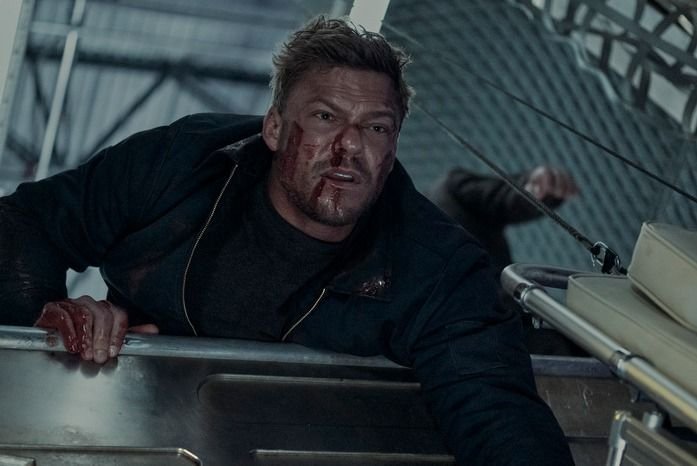
I’m watching Season Three of Reacher—my husband, who loves the books, is also suffering through it—and I am furious. Not just at the show, which is violently dull and predictably brutal, but at the culture that continues to treat this blood-soaked void as serious storytelling. We’re three seasons in, and the only evolution is that Reacher keeps finding new ways to kill people.
Critics love it. The Seattle Times says it’s well-done entertainment through and through. Forbes calls it over-the-top fun. IGN praises a righteous good time. Collider declares the season a propulsive and exciting story. Even The Guardian gives it a thumbs up.
Let’s be clear about what they’re celebrating: a show where a man executes others in elevators, basements, parking garages, and forests—with military precision and not a flicker of regret. Reacher, across three seasons, has killed more than 70 people—and we’re not done yet. He does so without hesitation or consequence. The violence is steady, and the message is clear: restraint is for lesser men.
Reacher isn’t just the lead—he’s the reward. He tortures, maims, and murders without consequence, and the show frames that as part of the pleasure. His blankness is styled as confidence. His detachment is treated as charm. Most telling is how often the series pairs his violence with sex, as if physical dominance is its own justification. The women he sleeps with aren’t characters with interiority or arcs; they’re passing comforts before he moves on, which he always does. This, we’re told, is compelling television.
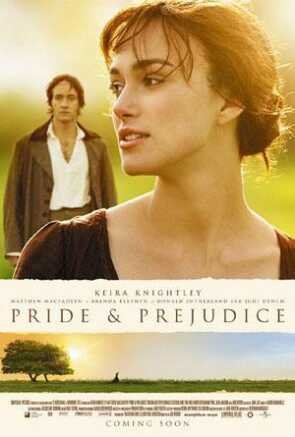
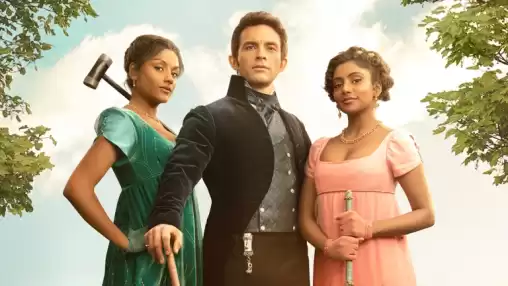
Meanwhile, love stories—Bridgerton, Nobody Wants This, the millions of romances readers devour every week—are treated as lightweight. They’re dismissed as too emotional or too joyful. Critics reject them because they center care instead of conquest, and we continue to act surprised when they succeed. That dismissal is not neutral. It reveals what kind of storytelling we’re still willing to sideline: anything that prioritizes connection over domination. A man who kills without hesitation and sleeps with women he barely knows is cast as a paragon. He is praised for his control, admired for his silence. That silence, increasingly, sounds familiar. It rhymes with the detached, grievance-fed fantasy that animates a lot of darker corners of the internet—where vulnerability is weakness, and intimacy is beneath you.
Reacher doesn’t just reflect that fantasy; it flatters it. It packages violence as virtue and hollowness as charisma, then calls it entertainment. The culture eats it up. This is about what we keep celebrating as a good time—what we rush to recommend, reward, and renew, while other kinds of stories are waved off as niche or slight.
If this is what we call heroic, maybe it’s time we asked who’s writing the definition.
a note:
To be clear, if you like Reacher, that’s fine. We can enjoy something and still question what it’s doing. The entertainment industry has spent decades not just producing stories like this, but elevating them. My frustration isn’t with viewers. It’s with the machine that keeps insisting this is what counts as entertainment.


I think it is the zeitgeist that allow books and movies like Reacher become so popular.
I agree with you. I don’t know why they treat violence in such a light. They even say it’s fun! Not my kind of series -well, I don’t follow any series anyway. Perhaps it’s always been like that. It’s harder to make laugh than to make cry, but tragedy has always been consideres as something ‘better’ than comedy.
I call it Yellowstone syndrome; violence and hatred is considered ~so deep, man because of them. Breaking Bad, BCS and the Sopranos were as violent, but they had purpose and questioned the violence.
I’m not familiar with Yellowstone, but what I liked about Breaking Bad is that it discussed real-world issues. People worrying about how their middle-class family will get by without them once they’ve passed on; how genuinely violent cartel life is; how family relationships break under pressure – all of that was relatable. It also showed how monsters have aspects of their lives where they don’t look like monsters, just ordinary folks doing ordinary things. I think the main thing though is that Tony Soprano and Walter White aren’t presented as heroic for what they do. Like you said, questions are asked about the steps they take.
Yes, being murderer really shouldn’t be sexy which it currently appears to be.
I haven’t seen the Reacher TV series, but I did read one of the books a long time ago. I didn’t like it very much, but I also felt it wasn’t the best example of the genre. I’m not sure what the official nomenclature is right now (I think it is Thriller, although I vehemently disagree with that), but I’ve always called them men’s adventure fiction. I think of them as a kind of mirror of romance. They are meant to be fun, enjoyable reads with the happy ending of good triumphing over evil. I haven’t read one in a while, but the very best of them, IMO, is James Rollins. His guys kick a$,$ but only when the fight is necessary, and they don’t have a revolving door of women but fall in love with only one, the heroine, who experiences the adventure right alongside them. Of his, I recommend
Subterranean (1999), Excavation (1999), Deep Fathom (2001), Amazonia (2002), Ice Hunt (2003) and Altar of Eden (2009) The Jack Ryan books by Tom Clancy are the same. Jack loves Catherine, a doctor who is smart and successful in her own right, and he sticks with her. Amazon ruined the series for me by introducing the multiple women trope in season 2, and I quit after that. Alistair MacLean is probably the grandfather of the genre, and his books are a mixed bag. Some of them are the misogynistic junk the genre is full of, with disposable, weak women only good for sex, but some like The Golden Rendezvous and The Guns of Navarone have smart, strong heroines the heroes fall head over heels for.
I think it’s unfortunate that Amazon chose to lean into the misogynistic stories rather than the better fare available in the genre. And that people are gobbling that up rather than looking for ones with more depth.
Just looked up the list of novels written by Alistair Maclean—to my shock, I had read practically all of them in my youth! They were all of a type—very British, heroic, patriotic men capable of carrying out their mission against all odds. Sacrifice for the country and all. I used to enjoy them very much and found some of them even moving (The Last Frontier was the best of the lot, I think). When I was reading them I did not think of them as being misogynistic—just very male centered (I was very young and did not question the male centeredness). Not very surprisingly, once I hit my 20s, I stopped reading them. I gave Tom Clancy a try just once; Jack Reacher never.
I liked some of the movies based on the books—Guns of Navarrone (how could one resist Gregory Peck as Captain Mallory!); Where Eagles Dare (Richard Burton, Clint Eastwood!!).
My favorite MacLean is Ice Station Zebra. The book is fantastic – the movie not so much. Guns of Navarone works as both a movie and a book, although the two are pretty different. But Gregory Peck as Captain Mallory is indeed irresistible.
I didn’t notice any misogyny the first time I read MacLean’s books, but when I did a reread of some of his works in the late nineties/early aughts, I noticed several volumes where the women involved were labeled as overly emotional, foolish, vapid, etc. The worst was Seawitch, where a rich tycoon had little respect for his daughters (he loved them, just thought them silly) but had all kinds of respect and admiration for the men they were marrying. It just really bothered me. Fortunately, that’s not in every book.
Also recommend the James Rollins’ titles mentioned above and his Sigma Force series (own all in paperback). Rollins does a fantastic job of portraying the strengths of women alongside really cool scientific concepts, theories… and conspiracies. If you are looking for more action and adventure with romantic elements he’s at the top of the list. The men AND women are kickass.
This trend also happened to Craig’s James Bond. In Casino Royale, he’s smart, he falls hard for Vesper Lynd, and he’s not invincible. By the time we get to Spectre, he’s just a killing machine, he doesn’t have to show us his brain, and the women are just a reflection of his machismo.
I may not have the details quite right, but years ago I read an author complaining that if he wrote (in great detail) about a deranged army vet dismembering a pregnant woman and throwing the pieces of her body off the Eiffel Tower, he would be praised for his gritty realism even though such a thing had never happened. If he wrote about a couple falling in love and getting married, he would be dismissed for writing foolish escapism, even though that happens hundreds of times every day.
The violence seems to be getting more and more explicit all the time and I think the real problem is that we get inured to it so it stops being horrifying.
Yep. The stories we tell matter. Far more, I’d argue, that the labels we put on things. If we don’t tell stories of joy, family, love, sacrifice, and non-violence, we end up with a culture that is not only inured to their opposites, but one that venerates them.
I did read the first Reacher a long time ago and that was too much for me. But I do wonder about how we culturally treat violence vs. sex. I worked at a small religiously affiliated college years ago and the library computers were filtered for sexual content, but not violence. When I asked about why violence was not also inappropriate in reaction to a young man from the local community surfing neo-Nazi sites, I got a shrug from IT. There is definitely a free speech element to this, but in a private organization that did filter, why not Neo-Nazi sites? I still don’t get that.
The Puritans. They were fine with mayhem, not so much with sex.
Christian woman here, the truth is that a common problem among older generations is that they continue to treat sex as THE MOST important thing within the Christian standard of living, as if the Bible did not speak equally against violence, lying, and other things that we view as sin .
I have railed against that my whole life! #preach
Personally, I think those critics are paid to give Reacher great reviews. I’ve read plenty of dissenting views outside the professional reviewer / influencer networks. I haven’t read the books, but from what I understand Reacher is a man of few words in the books which are full of his internal thoughts, which is probably hard to convey onscreen. I agree that Reacher’s violence in the show is OTT. He reacts and kills thoughtlessly and carries himself as someone morally above others. I do love Neagley, though, and hear she’s getting a spinoff series. Neagley comes across as much more intelligent and thoughtful than Reacher.
I hate the DEA agent Duffy in this season (her fake accent is also really obnoxious). To me she exemplifies everything that I hate about how kickass women are portrayed in more recent books and films.
I too hate Duffy–or the way she’s written. When she kissed Reacher the first time, I was yelling no at the screen and it’s gone downhill from there.
Maybe it’s wish fulfillment. I.e. women dream of being valued for who they are, of love and a lasting and fulfilling partnership of equals. Men dream of killing with no repercussions.
In some eyes, men = literature, and women = mindless fluff, so that influences the relative values to lit critics.
Good gods–I sure hope that’s not what most men dream about!
Well, based on what I’ve seen, many women also dream of killing or having a man who will kill for them. If some of the darkest dark romance books out there were adapted for the screen, there would also be lots of sex, revenge, death, torture, and violence.
That’s an interesting point. But I don’t think there are a lot of books where women want men to kill because it’s fun.
I remember seeing a book where the heroine was a serial killer who fell in love with her rival serial killer, and they both killed for fun, and another where a young killer fell in love with a “normal” girl who later, thanks to him, also discovers that she loves killing. I’m afraid I’m not a reader of very dark or erotic things (sex is often closely linked to violent plots, in fact), but if you ever want to explore these subgenres written by women for other women, there’s a Reddit site specializing in dark romance.
JUST SAY NO!
I think Reacher is the fantasy of not having any commitments–the fact that he just moves on each book, as well as the fantasy of “doing good” without all the due process. For a middle aged guy with a family, I think that is some of the appeal.
I agree AND I’d say that TV Reacher is soulless in a way book Reacher isn’t quite. My husband loves the books but has found this season to be a bummer because Reacher is such a cypher/killing machine.
I read 2 or 3 of the Jack Reacher books when they first came out, but then I got bored and didn’t read any more. They say that Romance is trite because it follows various tropes, but the Reacher books were all the same trope: He arrives in a small town, discovers that some Very Bad Men are doing Very Bad Things. He meets a woman and starts a relationship. He fights the Very Bad Men and, due to his physical prowess and strategic expertise learned when he was in the military, wins. He then moves on to the next small town, leaving the woman behind. In one book they still had a relationship at the end of the book; he didn’t move on till the beginning of the next one – still, same, same but different. At least in those initial books, I didn’t feel there was any character development, just plot.
Agreed.
If hubby likes the Reacher books I suggest he try Barry Eisler’s John Rain books with an equally competent and stealthily awesome protagonist. The series has a lot more romance and bromance than Reacher too.
I’ll check them out. Thanks!
Gladiator events for the modern audience. It’s not surprising to see this in our society’s determination to glorifying toxic masculinity. Not new, I know, but you only need to read the news to know misogyny and the absence of empathy is seen as strengths these days.
By some!! Not all.
By way too many people with power to make bad shit happen.
Reacher, the TV show is too violent for me. Also, I had to sit through gruesome suspence and horror trailers at the movie theater when I went to see the Dylan movie, maybe because it was rated R. On a happier note, I do like a new mystery series on Britbox called Ludwig.
I hear that’s cozy!
Yes! I enjoy it’s dark humor. I was sad to see Vera come to an end and I hope they come up with a spinoff similar to Endeavor.
The premise is a bit of a stretch, but if you can get past that, it’s fun and David Mitchell is great in the lead role.
I read a lot of the books. Maybe all of them up until 6 or7 years ago. That TV show is way too violent for me. No thank you. I guess I think maybe the books got too violent for me as well. I stopped reading them.
I’ve been following the comments about this topic with interest and, let me say right now, I await brickbats for my opinion about Reacher – the books and the TV series – both of which I enjoy. In some ways, Jack Reacher is no different than the heroes of the westerns we (once) adored. For example, (and I tell my age here) I recall my father’s love of Richard Boone as Paladin: a gun for hire. The gun for hire appeared repeatedly in westerns and sometimes that person was bad (black hat) and sometimes he was more of an avenger who was going to the aid of someone unable to help themselves (white hat) in a world where many lived far from safety or justice and conflict was constantly part of their world. (Apologies in advance to those who are offended by the “black v white hat” illustration but that’s how it was in them there days.)
I tend to view Reacher more in this light. He is a wanderer (those westerns again) of no fixed address but he is a West Point man, had a mother of whom he was fond and he took good care of the soldiers who served under him in the elite US Army MP services. He gets involved in all kinds of situations (again, the metaphorical black v white hats) but he does not instigate them, rather they seem to find him (plot trope). Often he gets involved wanting to help someone where he sees an unjust situation, a danger to someone, an evil group trying to harm the innocent, etc. So, just like the wandering gun for hire from the western, he has the skills to intervene and, yes, he uses them. Afterall, he is a highly trained soldier and in all of the books I have read (around 12 of them now) he never uses his strength and skills to harm the innocent. And yes, of course, he is lethal against the proverbial Bad Men. Rather like Superman or Batman or Spider Man, etc., ad infinitum. These heroes, as far as I understand it, are meant uphold moral values, understand right from wrong and don’t hesitate to sort things out. He does not just utilise violence to deal with problems, there is a lot of careful, analytical thought and knowledge that goes into a plan to deal with the issue at hand. Personally, I find that can be attractive.
Comments have said he is toxic against women. Not so sure about that. He does get sexually involved with women but as far as I can recall, all of them were alpha women (e.g. FBI, DEA, CIA, Secret Service, NYPD, etc.) who instigate matters and must be TSL if they can’t see he isn’t going to be a permanent fixture so they seem to relish some mad, wild sex without any strings attached. So what’s so wrong with that? Glorified one night stand and romantic fiction is full of those. A man whose luggage consists of a folding toothbrush isn’t going to start reading the real estate ads on Zillow, is he?
It is interesting that in one of the books, the Reacher lover du jour comments to Neagley that surely she must have slept with Reacher. Neagley denies it and then tells Reacher about the conversation later and tells him that she cannot bear to be touched and she is so fond of him because he has never touched her, not even a “well done, mate” pat on the shoulder. To me this shows that there is more here than superficial “toxic” masculinity.
I often read my husband’s books and particularly adored the Sharpe series which we read together and we loved the films. They were certainly violent but such rattling good reads. Purely as an aside, both series have been written by British authors who live in the USA. I do wonder if there is anything to be said for their perspectives? I know that Reacher has a soft spot for British tailoring and shoes as it comes up in one of the books.
In terms of the violence level in the TV series, yes, there is a lot. But wasn’t there in almost any super hero film or TV show you can think of? I personally thought Game of Thrones was pretty ripe with it. Do I support violence? In real life, of course not. In fiction, occasionally as it’s better on the pages of a book than on the nearest street corner. And I suspect that most kids who are stuck to their phones and social media (plus god knows what else on the internet) would find Reacher pretty tame and not worth a look in.
So, herewith a slightly different perspective. One critic quoted on the comments pages of many of the Reacher books says “I want to be Reacher and if I can’t, I want to shag him”. Interesting. The critic is a woman. I like to hope I am a strong woman so the brickbats can come – I am ready. I might ask Jack No Middle Name Reacher to come and help me out.
I dunno. I think Reacher in the books has a lot more nuance than Reacher on the TV show.
And yes, Game of Thrones was horrible in terms of its violence and, overall, its take on women.
I’m still gonna say that a show where the hero has shot ten people without a thought before the credits in simply not for me.
Well done Dabney. Couldn’t agree more.
I’m so over critics who venerate violence, mayhem, and loneliness and make fun of love, connection and joy.
Welp, we had to finish it up. I bet my husband Reacher would kill ten people which he did before the credits. I upped my bet to 25 and was wrong–Reacher only shot 20 people in the finale although easily 50 people died. The man does not believe in due process, that’s for sure.