The thing about romance novels, it was always said, they had to have a happily ever after ending (or, perhaps, a happy for now ending.) Romance Writers of America still says this:
Two basic elements comprise every romance novel: a central love story and an emotionally satisfying and optimistic ending.
A Central Love Story: The main plot centers around individuals falling in love and struggling to make the relationship work. A writer can include as many subplots as they want as long as the love story is the main focus of the novel.An Emotionally Satisfying and Optimistic Ending: In a romance, the lovers who risk and struggle for each other and their relationship are rewarded with emotional justice and unconditional love.
https://www.rwa.org/Online/Romance_Genre/About_Romance_Genre.aspx#:~:text=Romance%20Subgenres,from%20sweet%20to%20extremely%20hot.
OK. This, for me is still true. (Not all agree anymore, however.)
Romance novels now include love stories for the polyamorous, the marginalized, queer, and pretty much every pairing/grouping you can imagine. This is a good thing.
But there is one aspect in newer romance I’m ambivalent about–the rise of the men and women treating each other poorly. And, yes, I’m seeing more of this change in women leads because, historically, women have been required to be kind in romance. Or, at least, not prone to hitting their partners or being mean.
Now, I am all for gloriously powerful leads but I struggle with any lead, of any gender, whose anger at the world evinces itself in poor treatment of those who love them. We’ve called this out in our reviews when we see it but I’m thinking there are those for whom it works simply due to the rise of such leads.
Maybe it’s just that anger in romance isn’t my thing. What do you think? What do you want from today’s love stories? And is there room for very angry heroes and heroines who have just had it with the worlds in which they live?
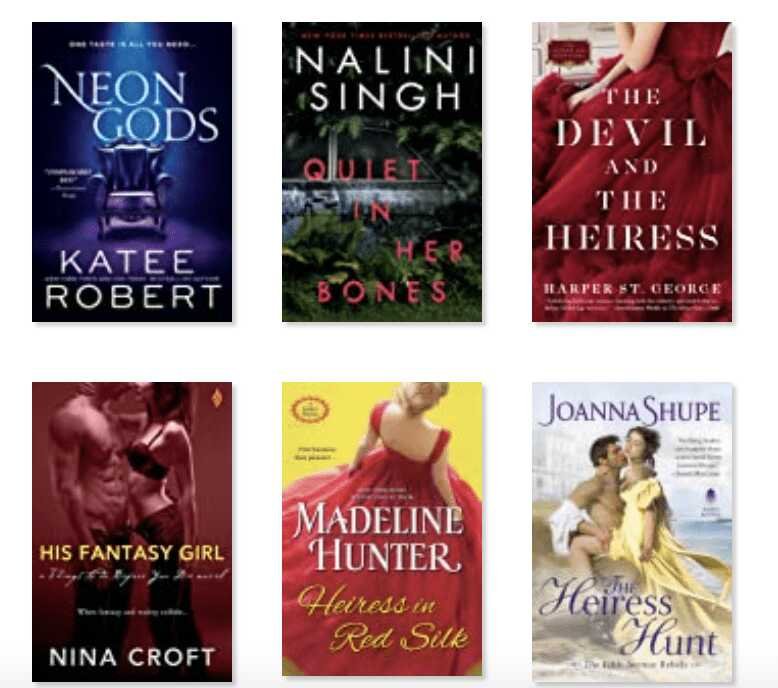

Maybe this is too abstract:
I agree.
I need to have empathy with the love story to enjoy it. Without an emotional bond, reading a love story falls flat.
I need to feel safe to relax in my own space.
I do not feel safe with angry people, no matter their gender.
Even if their anger is justified, not directed at me, manifests as revolutionary zeal for a good cause … I cannot live with it day to day.
So, while I may admire angry people sometimes, I will never believe in a HEA with an angry person, unless it is clearly shown that there is a safe space for the partner to thrive. So the love story will be weak for me, since I cannot relate.
Because if this, mafia or motorcycle romances work badly for me, and realistic medievals in the old times did not – these are worlds where safe spaces and not-angry people are too rare.
I hear you!
Very well said, Lieselotte!
I can handle morally grey characters if they are redeemable. I have a difficult time rooting for a fictional character that I would be fighting against in real life–ie, people hurting innocents or living by breaking/bending the law, especially for their own gain. (Which is why I also steer clear of things like political romances and not just mafia or MC.) I have a little more leeway when reading historicals, but still need the main characters to be redeemable. Physical abuse by an MC is just a no.
What I want is similar to Lieselotte in that I read for relaxation and to some extent escape, and want to feel safe. I can handle a fair amount of emotional tensions and some types of angst, but not all. That, of course, is my limitation, not the genre’s. Many objectively wonderful books are too angsty for me for reasons other than any of my “no go” criteria, such as lots of ugly family drama.
I would enjoy m/f romances more if there was less sexual objectification built into it. I keep trying to read popular contemporay m/f romances and I can’t tell how many start with the male lead immediately having sexual thoughts about the female lead and then acting like a dog in the manger around her. (“I don’t want to want her except maybe to sleep with but I dont’ want anyone else to get near her.”) I also realize part of my issue is just that, my life experiences that make me sensitive to men who feel/act even a little predatory or controlling towards women. I will readily admit that the same situation between two men might not strike me the same way.
I believe I tried to make this point recently!
I am with you on angst. I’m just not that interested in reading endless pain in my romances.
Yes, you did! 🙂 I’m not agaisnt angsty books at all, they’re just rarely for me. 🙂
I like all the angst, as you know! I like that it gives me the opportunity to experience that kind of uncertainty with the safety net of knowing it will all work out in the end!
But I have to say that I don’t think feeling uncomfortable reading men who act in the way you describe is a “just you” thing; I haven’t experienced what you have, and I don’t like it either. To me, that’s not a man, it’s a total dickhead.
Just to be clear, I do not mind anger and angst on the way to hea, or hfn, I just cannot have it unresolved at the end.
Many women in books today are not safe for their partners, imo. They stay angry, or entitled, and that cannot be a successful love story for me.
I was just talking to my children about what I hope for them in their partners. The number one thing: your partner should be your biggest fan. If that’s not the case, it’s not a love story for me.
Several members of my family and I have had talks about why they love horror and angsty TV or movies. For them it’s almost cathartic, helping release their own stress by the time it’s over. It doesn’t work that way for me. Honestly, I wish it did because I don’t read some books or watch some movies because they will stress me out, but I know sometimes I’m missing some good stuff!
I want a romance to be a love story between EQUALS. One of my biggest peeves in recent years in m/f historicals especially has been the heroine who runs rings around the hero and makes him look stupid and ineffectual. And yet, she still pants and lusts after him. One partner in a romance getting everything they want while the other makes all the compromises isn’t a romance IMO – and okay, yes, back in the day, the man got everything and the woman compromised, but simply reversing the situation isn’t the answer, and having all the power on one side does not a romance make.
I don’t want to read about a hero who is constantly made to look stupid because the author, for some reason, thinks that the way to convey that her heroine is strong and independent is to write her as a selfish brat.
And if it’s not okay for a man to hit a woman – and obviously it isn’t – the reverse isn’t okay either. The book in review you’ve linked to features TWO instances of the female lead hitting the male lead, but at the time I wrote the review, none of the others I had seen called it out. Could you imagine the uproar in romancelandia had the situation been reversed?
So I want characters who complement each other and who are singing from the same hymn sheet. That doesn’t mean they can’t be opposites in some outward ways, but they need to share some of the same basic tenets about what they want from life.
I remember when commercial TV sitcoms went down the road of making the male lead look like an idiot. I know it was a backlash for all the years that women in shows were the perfect wives, etc, but it got really old really fast. My husband stopped watching sitcoms all together because he said they so often made the father look stupid, and he was right. That’s been years and years ago because we got rid of cable and network TV well over a decade ago, so I have no idea what commercial TV is like today. What you’re describing isn’t anything I want to read, either.
I think one reason many people find it acceptable for a heroine to hit a hero is because women’s anger has historically been taken far less seriously than men’s anger. How many times have heroes said something like, “You’re cute when you’re mad”? Angry women are usually treated like wet kittens – more amusing than dangerous – so if such a woman slaps or punches a man, no one in the story is bothered by this.
Plus, sometimes this violence is used to show how passionate the heroine is, much like in old-skool romances where the hero raped the heroine to show how passionate he was. There’s a Bromance novel where the heroine repeatedly punches the hero in the chest because she’s frustrated by their problems and she’s crying as she whales on him. A lot of heroine-hits-hero scenarios are probably aiming for this “look how emotionally affected by him she is” effect.
There’s also never any indication that the men in these scenarios are injured in any way by the slaps or punches. No pain, no lingering soreness, no bruises, not even any reddening of the skin. So in-story, nothing much happened (again, like in old-skool romances where the heroine could be raped without any physical or emotional damage).
I hear you but it’s still not something I enjoy reading.
Oh, same here. Whether it’s the hero manipulating the poor unwitting heroine or the heroine hitting the helpless hero, I’m not a fan of the double standard.
Reading the first link, I have to wonder why people feel the need to co-op the genre “romance” for anything other than a legitimate romance novel, with its HEA or HFN ending. Can’t the type of book described in that post simply be women’s fiction or literary fiction? I’m sorry, but a woman who ends the story alone but happy with herself, while a positive message for sure, is not a romance by any definition of the word. And “platonic” love is not romantic, therefore a book with that focus is not a “romance”. Ugh.
As far as the meanness goes, I’ve yet to read a book where one MC hits the other MC and is still considered in any way heroic. In fact, I’m utterly baffled about the popularity of “bully” romances that are sold as enemies-to-lovers. It’s just a modern day take on those old skool bodice rippers where the heroine fell in love with the rapist hero.
YES. And yet it’s an argument that surfaces every few weeks (on Twitter, anyway) as someone who clearly thinks they’re entitled to some romance £££ but doesn’t want to get all those nasty, silly romance cooties on them tries to insist that the genre doesn’t need the HEA, or to tell readers we don’t need the HEA because it’s outmoded while congratulating themselves on how clever they are because romance readers are all so dumb.
Yet, they NEVER respond when anyone points out that working out whodunit is the defining characteristic of the mystery genre. Funny that.
Totally agree. It’s as if these people want to feel all the feels that you get vicariously through the characters falling in love with each other, yet they don’t want to admit that they like a – gasp – romance novel. Only bored, horny housewives or silly teenage girls read romance! Admitting that needing/wanting some form of romantic love is weak or makes you not a boss or something like that. Again, I fully support the message that you DON’T need an SO to be a complete, fulfilled person, and that loving yourself and making your own joy is just as important as finding it with someone else. So write those books and read those books with my full cheer and blessing. Just stop calling them romances. Call them me-mances or friend-mances.
I think you’ve accurately pinpointed the why – they want some of those romance dollars without (gag) being a romance author. This is like wanting to make as much money as Hershey without having to dabble in sugar or chocolate. That’s fine, just don’t try to sell it to me as a chocolate bar!
Spot on! Some writers want the romance readers’ money but still want to look down their noses at the readers themselves. You want my hard-earned money? Then put away that contempt you clearly have for the genre I love!
Loved “romance cooties.” So, so funny. So, so accurate.
Much of the disdain for romances is just pure sexism.
It’s so hard baked into our culture, this disdain for what was traditionally women’s stories. I always want to make T shirts that say:
I’m a feminist and, yes,I love romance novels.
The article actually contains the truth. It says that these books are “also part of a wider trend in women’s fiction.” I would argue that the heroine, being happy with who she is and having worked out her place in the world, has always been a trend in women’s fiction. In Kathleen Gilles Seidel’s Shut Up and Wear Beige, the heroine landed on her own feet after a divorce and was happy knowing her marriage was over, but the family ties between herself, her ex-husband, and her sons remained strong despite that.
I agree with a lot of the comments. One thing I don’t like is that a lot of historicals are now basically fantasy novels. If it is “historical” then I want a realistic look at how, and importantly, why people behaved how they did at that point in time. People have always been people and I think you can have a satisfactory romance without just replacing any historical/legal/cultural issue with the fantasy that those things didn’t exist. It won’t be the relationship that might exist in 2024, but good writers can show us how people loved in a different time.
You have lots of company who share that perspective!
**raises hand**
Exactly! Dressed in a 18th century costume with 21st century attitude? NO thanks!!!
If I lose respect for a character, due to them being incompetent or have anger issues, I DNF.
HEA/HFN definitely required.
I am polyamorous but am utterly uninterested in reading polyamorous romances.
What pisses me off is mistreatment by the author of a character. The one sided grovelling after a two sided dispute in Chloe Brown was a notable example of this.
“The one sided grovelling after a two sided dispute”. This is becoming more and more common.
I dislike, in fiction and in real life, the idea that one person is inherently right regardless of issue.
As I often say, angsty with a splash of melancholy is my romance jam. Last week, in the comments on Nicky James’s PROMISES OF FOREVER (a book I loved), there was an exchange about the difference between angst and melodrama. I love angst in my romance stories but I loathe melodrama. Angst is where character drives plot, with characters who act consistently based on their personalities, upbringings, and circumstances. Melodrama is where plot drives character, so characters often behave in wildly inconsistent ways just to get the story from point A to point B. An angsty book prevents a story from being too syrupy or too smooth: there has to be some conflict. But I will DNF melodramatic stories with characters who act one way in one scene and a completely different way in the next chapter.
Romances–in movies and in books–are the closest we get to experiencing fall in love, ourselves. For me to love a romance, I have to fall in love with the man, myself, and to understand why he falls in love with the woman. If I don’t like and respect both characters, how can I love the book?
In the past, heroines had to be perfect. To gin up the plot, past heroes were awful to the heroine, until he saw the truth: “Gee! You were a virgin when I first raped you?” Or “This baby is mine?” or some other nonsense. Thankfully, that trop has pretty much died. To switch the gender of the despicable character is not progress. The essence of romance is the basic goodness of its hero and heroines. How to make goodness interesting and complicated demands the intelligence and talent of the writer.
PS Please forgive me for ignoring M/M, F/F, and transgender couples . I believe in the big tent of romances, but wanted to talk only about my reading.
People often say that everyone deserves love. I don’t agree. I don’t think ANYONE deserves love, except from our parents. Love is a gift. You are never entitled to a gift; that’s what makes it a gift. So if you are lucky enough to find someone to love who also loves you, you should feel amazed and humbled and grateful, and you should want to treat them as well as you can because you are full of awe at your good fortune. You will sometimes fall short of that, because you’re human, but then you try to do better.
A lot of these characters who treat their partners horribly, especially the heroines, have the attitude that love means their partner accepting all their faults and just sort of suffering through them, grateful for the opportunity, without ever challenging them, while they themselves never undergo any character development, and this is just…not love? It’s emotional abuse! Yes, if your partner truly loves you, they will accept your faults, but they won’t enable them, and if you truly love them, they will inspire you to be the best version of yourself (and vice versa) Unconditional endorsement from your partner of all your actions and choices isn’t supposed to be a thing.
I will read romances featuring characters who are arguably horrible people, or who are festering balls of incandescent rage, or who need a lot of character development, as long as they treat the people in their lives well and hold themselves accountable for their mistakes. But if the characters treat each other badly or in poor faith, then I don’t want to read about them, and I will not accept their alleged HEA as such.
when i read judith ivory’s black silk years ago, it was a revelation. the richness of the prose, the symbolism, the flawed leads gave it a certain depth that a lot of romance misses. same for madeline hunter’s excellent by possession; the leads are flawed and complex and reading about the push and pull of two normal humans building a relationship was heavenly. i use normal to signify that the characters behaved as we all do: react with anger, plot and deceive to get what they want, all without the author sacrificing historical detail. i dislike being preached to, i dislike characters who behave in too correct ways, and conventional romance is currently full of both.
I too prefer characters with nuance. Hunter writes those well as did Sherry Thomas back in the day. Today, I see the most nuanced leads in urban fantasy which I find myself reading more of.
I don’t even know what to say about the authors who say “it’s a romance but there’s no HEA” except that they are wrong.
As to the more aggressive heroines, I personally think it’s part of the whole ‘fight the patriarchy’ ethos very popular now among romance authors–many of whom are women, who have been snubbed for writing ‘mommy porn,’ who had been asked for years when they will write a real book, etc. And it has been accepted for heroes to be AWFUL for a long time in the name of conflict and the big dramatic grovel at the end: stalking, manhandling, belittling, and so on, even before we get to the books where a man kidnaps a woman for revenge or lies to her to get her to sleep with him or locks her up against her will “so he can protect her.” So, I think this is just a reaction (and payback) for those previous, sometimes-abusive, heroes. Some of those guys did deserve to be punched in the face and more than once I wished a heroine had done it, instead of swooning about how sexy he was when his eyes flashed and his biceps flexed and he growled that she was not to set foot outside the house without him.
I completely get that. But two wrongs don’t make a right and all that; just because ‘heroes’ got away with awful behaviour in older romances doesn’t mean heroines should behave equally badly to ‘redress the balance’. I think we’re better than that.
Me too. Plus, at the end of the day, most women are straight and are looking for men. And most gay men are looking for men. To make men the target of anger is, to my mind, kinda missing the point in a romance novel.
Oh, I don’t really like it, either. Just trying to assign a reason for why it seems to be having a moment right now.
And I think you are exactly right. <3
I believe that romances can have HFN and even sad, bittersweet endings. It may not be traditional for the genre, but we’ve had many, many, MANY examples across film over the decades, so I’m willing to read about tragic love in the genre. It’s not unromantic to have a non-HEa romance.
What I want, as always, is two people (or more!) who make me yearn
Then it’s a love story but not a romance IMHO.
I think the English language tends to run into some real problems with the word romance. For example, Edgar Allen Poe may be part of the romantic movement, but none of his works are what modern readers would call a romance. And I know in many, many cultures, particularly Asian cultures, great romances will often end tragically. However, I don’t think of those in terms of 21st-century romance novels. When I pick up a romance novel, I want not what meets the broad definition of romance but what meets the more narrow definition of a romance novel.
The mystery genre is the perfect parallel. A mystery is still a mystery if it’s never solved, but a Mystery Novel promises that the core mystery will be solved. Other genres too: not all books with young adult characters or with a fantasy are YA or SFF. The definition of a word in popular parlance is not the same as the definition of a publishing genre, and it seems disingenuous at best for authors who don’t want to follow the accepted definitions to argue otherwise.
I am more than happy to read books with romances that don’t have a HEA… in other genres. When I pick up a romance novel, though, it better give me a romance-novel romance.
Yes, love sories can be sad, tragic and bittersweet, but if it doesn’t end with the main couple HEA or HFN, then it’s not genre Romance. I love the yearning, too, but if that yearning doesn’t end in an HEA/HFN I’m not interested.
If I come across an angry and aggressive (as opposed to assertive) heroine or hero, I will Not Finish the book. If a main character occasionally loses his or her cool under extreme provocation, or knows that he/she has to work on self-control, then that’s OK, but someone who’s unapologetically angry is not someone I want to read about.
I still want the HEA or at least a HFN – that’s why I read romances.
It’s tough. I get that women should never have to be sugar and spice and everything nice, as the old rhyme says. But not smiling all the time doesn’t mean a lead has to be furious all the time either.
Yes.
I see constant low level anger nearly everywhere, as if it had become the norm. I do not like this „baseline setting“ at all, and avoid such people.
I try to support those where their anger is a gift to all of us, like some important issue activists, because I am grateful that their anger keeps issues in focus, but I cannot spend too much time with such persons, and cannot imagine being their partner.
So in romance, just no. I cannot relate to those who can live with such a ticking angerbomb.