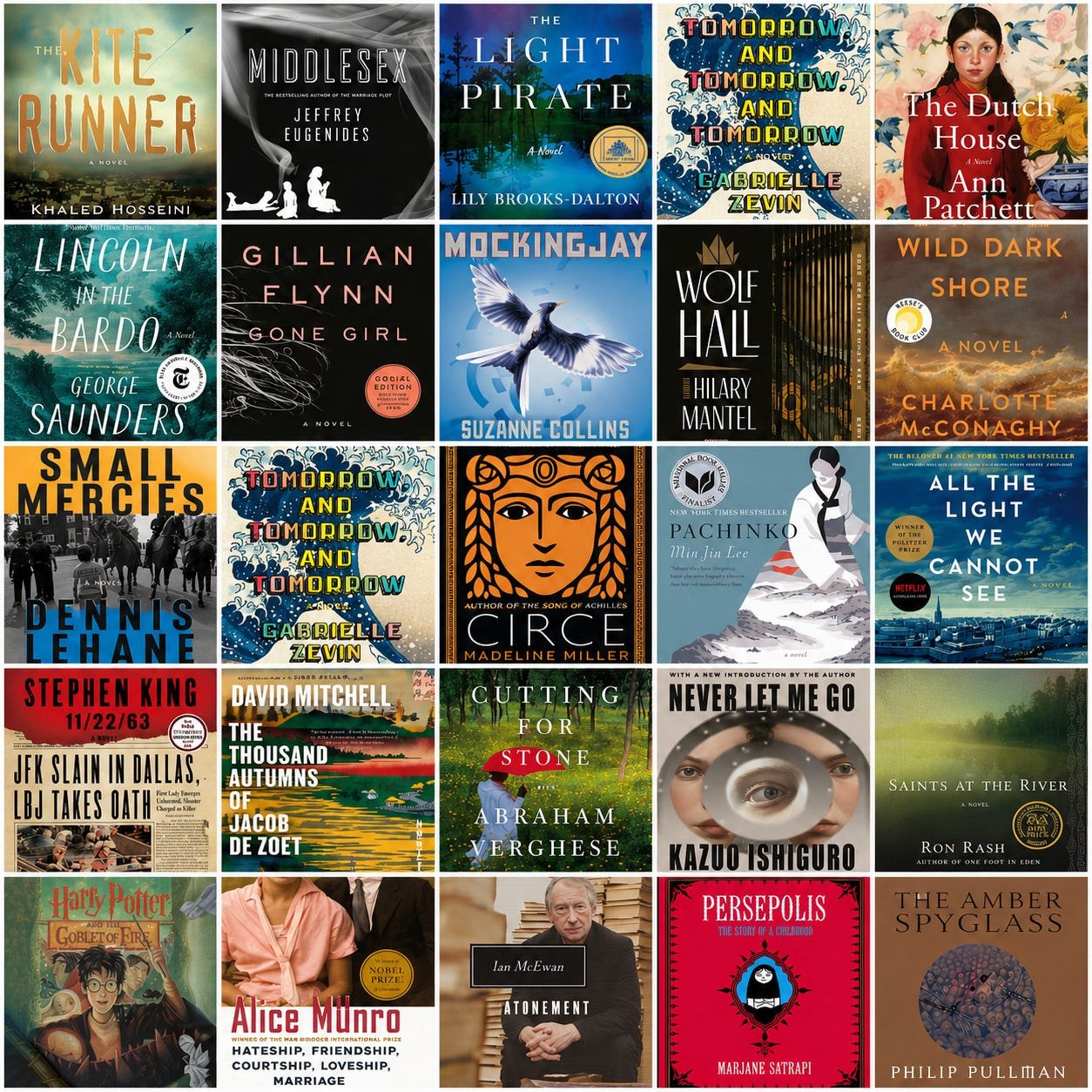
This is the second of three lists outlining my thirty favorite thriller/mysteries of all time. The lists are in chronological order—this one covers books from 2010 to 2024.
Faithful Place (Dublin Murder Squad, #3) by Tana French (2010)
I’ve read every book French has written. Thus far, out of the ten, I’ve loved eight, thought one was quite good, and, startlingly, disliked one. (The Witch Elm) Thus, picking my favorite(s) of French’s is tough. I’ve chosen two, the first of which is Faithful Place, the third book in her Dublin Murder Squad series. It’s the story of murder, sure, but the ways in which French explores love, loss, memory, and family make the book so much more than just a thriller. It’s a flat out superb read.
Gone Girl by Gillian Flynn (2012)
I adored Gone Girl. I am grateful I read it in the era where spoilers were easy to avoid—I can still remember gaping at the very first paragraph of Part Two. It was a book that as soon as I’d read it, I wanted to do so again. Flynn’s precision with both plot and words riveted me. Everything about the novel, including its morally ambiguous framework, worked for me. If I could just pick ten favorite thrillers of all time, Gone Girl would be on the list.
I Let You Go by Clare Mackintosh (2014)
Mackintosh’s debut is a meticulously written shocker. The book is divided into two very different parts—Part One opens with a hit and run and then shows you how the crime weighs on the lives of the trying-and-failing-to-cope mother as well as the detectives determined to find the killer. Part Two opens with a twist—it made me gasp—and then deconstructs all you thought you knew about what happened in Part One. The novel is the best kind of clever—by its end, almost every question you had is answered, smartly. I’ve read all Mackintosh’s subsequent thrillers—I love her DC Ffion Morgan series; this one is a great place to start.
The Dry (Aaron Falk, #1) by Jane Harper (2016)
Jane Harper had been a journalist for a decade when she decided she wanted to write fiction. So, she did what many of us do when we want to learn a new skill: She took an online course. It must have been a hell of a course because her debut novel The Dry–which she wrote in 12 weeks–became a bestseller. It was my favorite thriller of 2017. Set in rural drought-devastated Australia—you’ll feel the dust float up from the page—it’s a searing portrayal of family, community, and privation. It’s a gem.
Conviction by Denise Mina (2019)
This best seller by Mina, one of the best Scottish writers around, is a wild rumpus of a read; funny, astute, and so smartly plotted I found myself thinking oh no she didn’t in the best way possible. As the novel begins, Anna McLean, an upper middle class Glasgow housewife is bored with her comfortable life, and spends her mornings drinking coffee and listening to true-crime podcasts–the latest about a family murdered on an exploding yacht (the Dana). By the end of the second chapter, her life has blown up spectacularly, she’s on the run with the least likely of sidekicks, trying to solve what really happened on the Dana, and is finally coming to terms with her past. It’s a blast.
Long Bright River by Liz Moore (2020)
Liz Moore rocketed to superstardom with this book. The novel made real the horror of the opiate crisis–the thousand people who overdose every week, the families destroyed by addiction. The book is more than a grim urban Hillbilly Elegy. Moore’s characters are layered–both tragic and heroic–and, despite their contradictions, worth rooting for. Moore is an excellent storyteller—I’d argue her storytelling here is as good as her superb world building. There’s a lot of buzz right now about her next novel, The God of the Woods. Both are winning reads. Still, Long Bright River is the better book.
False Witness by Karin Slaughter (2021)
I’ve read just about every one of Slaughter’s novels. Her books are genuinely, once started, impossible to put down. That said, many of her books have deeply unsettling violence, always against women, that can feel overdone. In False Witness, the crimes are disquieting but not overwhelming and the story, that of two sisters, is brilliant. Like Long Bright River, this is a story of sisters and addiction. Here, the past shapes the future unrelentingly and you’ll root for both women, one almost lost to drugs, the other trying to save them both from their fucked up past. False Witness offers the best portrayal I’ve read of how families cope—and don’t—with addiction. It’s one of Slaughter’s very best.
The Night She Disappeared by Lisa Jewell (2021)
I like almost (but not all) of Jewell’s compulsively readable thrillers. This one, Then She Was Gone, The Family Remains—all are smart, fun reads. Jewell excels at character and at—one of my favorites—the one bad choice plot. In this novel, a beloved daughter vanishes. The story of her fate, which turns out to be a story about the choices we make when young and in love, is beautifully rendered. If you’ve never read Jewell and you like character-driven mysteries, you’re missing out.
Small Mercies by Dennis Lehane (2023)
This and the basically perfect Mystic River are two of my favorite books of all time. Set in Boston in the summer of 1974 and focused on the city’s violent response to the forced integration of the city’s schools, Small Mercies is not for the sensitive reader. The main character, Mary Pat, is a bitter, alcoholic, racist who, when her daughter vanishes, takes on the Irish mob, the police, and, from her perspective, all of Boston to find her child. It’s hard to understate how deeply, in the ‘70s, many white working class people hated the Black families who’d been granted legal access to the neighborhoods, schools, and jobs that had previously for whites only. That hatred—and those who worked against it—initially fuels Mary Pat’s determination. But as she searches for her child, in Southie and beyond, it becomes clear that, what happened to Jules is more about her world—Catholic, poor, sustained and threatened by the Irish mob—than that of the blacks she first suspects. The plot is propulsive—what Lehane novel isn’t?—but Small Mercies’ true power lies in its exploration of racism, money, power, and a mother’s flawed love. It’s extraordinary.
Devil’s Kitchen by Candice Fox (2024)
Candice Fox is one of Australia’s best-selling mystery writers but I’d never read her until I was given Devil’s Kitchen to review. The setup is irresistible: New York City’s fire department, especially after 9/11, is known for their heroism and skill and one team, Ladder 51, is no exception. But the crew, Ben, Jakey, Engo and their leader Matt, are also a ruthless group of brilliant thieves who use their intimate knowledge of the city’s architecture and their willingness to do whatever it takes to steal millions from banks, jewelry stores, and art galleries. Their city’s trust in them as well as their very jobs have made them some of the most successful criminals on the East Coast. The novel kicks off with the tension cranked up to eleven and never lets up. If you’re a fan of smart, fast-paced, adrenaline-fueled thrillers, Devil’s Kitchen is not to be missed.